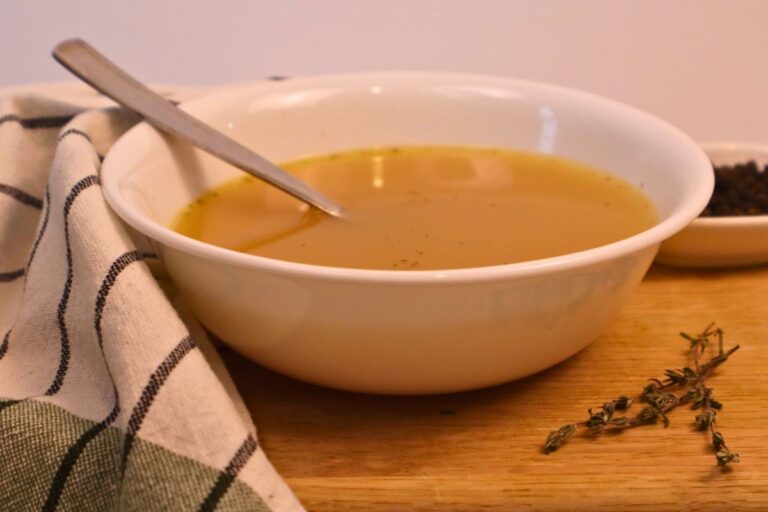
How to Pressure Can Bone Broth (Step-by-Step Safe Method for Beginners)

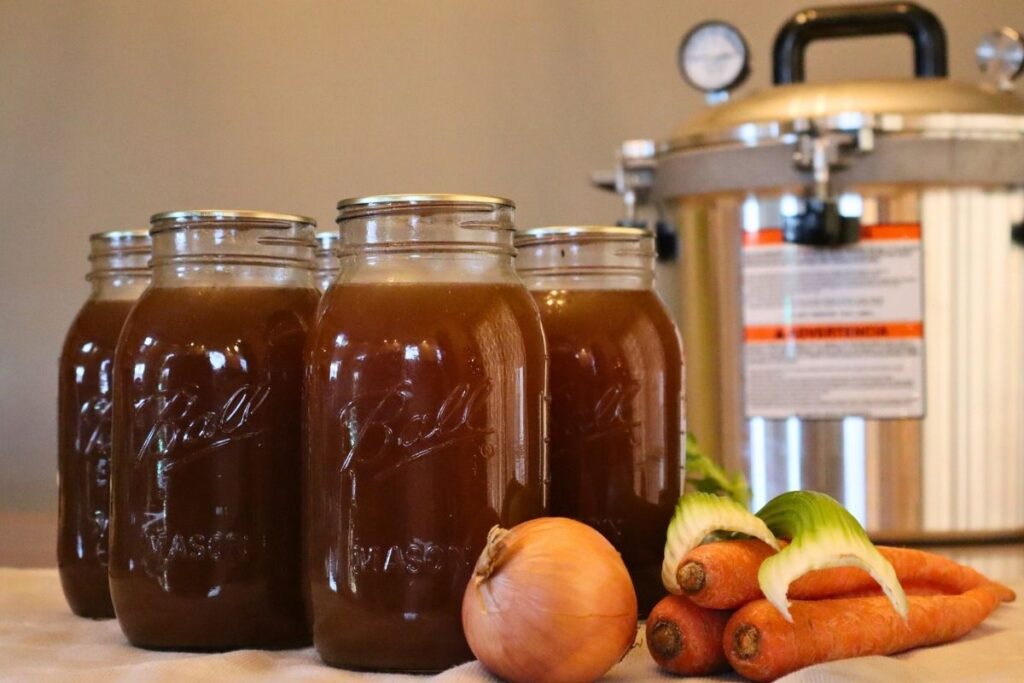
Pressure canning bone broth is a simple way to make it shelf-stable so you can always keep nourishing, from-scratch broth on hand. In this guide on how to pressure can bone broth, I’ll walk you through the basic steps, equipment, and safety tips so you can confidently preserve large batches at home and free up freezer space.
Note: This post may contain affiliate links. Please see our disclosure policy.
How to Pressure Can Bone Broth (Quick Overview)
Pressure canning bone broth is a simple way to preserve homemade broth so it’s shelf-stable and ready whenever you need it. It can sound complicated and maybe a little scary, but it doesn’t have to be. Here’s a quick summary of what we’ll go over in greater detail.
First, you’ll strain and reheat your broth and pour the bone broth into clean jars leaving about 1 inch of headspace. Then wipe the rims, place a lid and ring on, and process in a pressure canner following safe, time-tested guidelines. Once the times up, the jars just need to cool and sit for 24 hours. Then all that’s left is to check the seals.
That’s the process in a nutshell but don’t worry, I’ll walk you through the basic steps, what you’ll need, and a few safety tips I keep in mind when I’m pressure canning bone broth in my home.
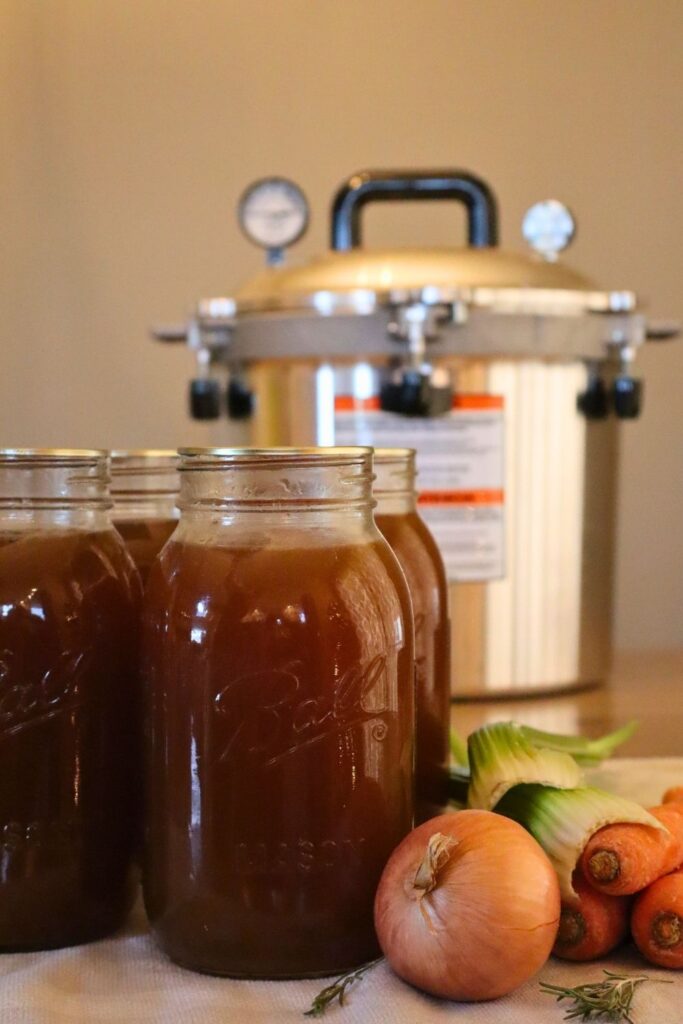
Pressure canning can seem so intimidating. I’m really not sure where the fear surrounding pressure canning originated, but I know for me it started during my childhood that I associated it with being “risky”. I know there are many others who feel the same way or they were never taught how to safely pressure can, so there is some uncertainty with it.
It took me until I reached my mid-30s until I finally conquered that fear. I had actually purchased a pressure canner, and it sat in the box for far longer than I’d like to admit. It was my husband, Todd, who finally said, “Lets figure this thing out and use it”. So, thanks to him, we did! Not only did I realize that yes, it is safe, but that it’s not nearly as complicated as I thought it would be.
It’s the same lesson I learned when I started making bone broth. At first, I was intimidated, but now after learning the skill, it’s no big deal! If your new to making bone broth, you can start with my stovetop or roaster bone broth methods before learning how to preserve it.
If you’re brand new to pressure canning, and feeling a little overwhelmed, I just want to encourage you—that you can do it! Learning to pressure can is just like any other skill—it takes a little time investment upfront to learn it, but before long you won’t have to think about it, and it will become second nature. I will go over all the steps and details that you need to know!
Table of Contents
Why Pressure Can Bone Broth?
One of the biggest benefits of canning bone broth is that it makes it shelf stable. It does not take up your precious freezer space which is especially helpful when freezer space is limited or already full. Every year at the end of the gardening season it’s like playing a real-life game of Tetris at my house—attempting to fit in every last bit of preserved food—anyone else?
You also don’t have to worry about losing your broth during a power outage or if your freezer stops working. Last but not least, it’s just so convenient to have it ready to use—no thawing needed. You can simply open a jar and quickly pull together a fast, nourishing soup.
Equipment Needed for Pressure Canning Bone Broth
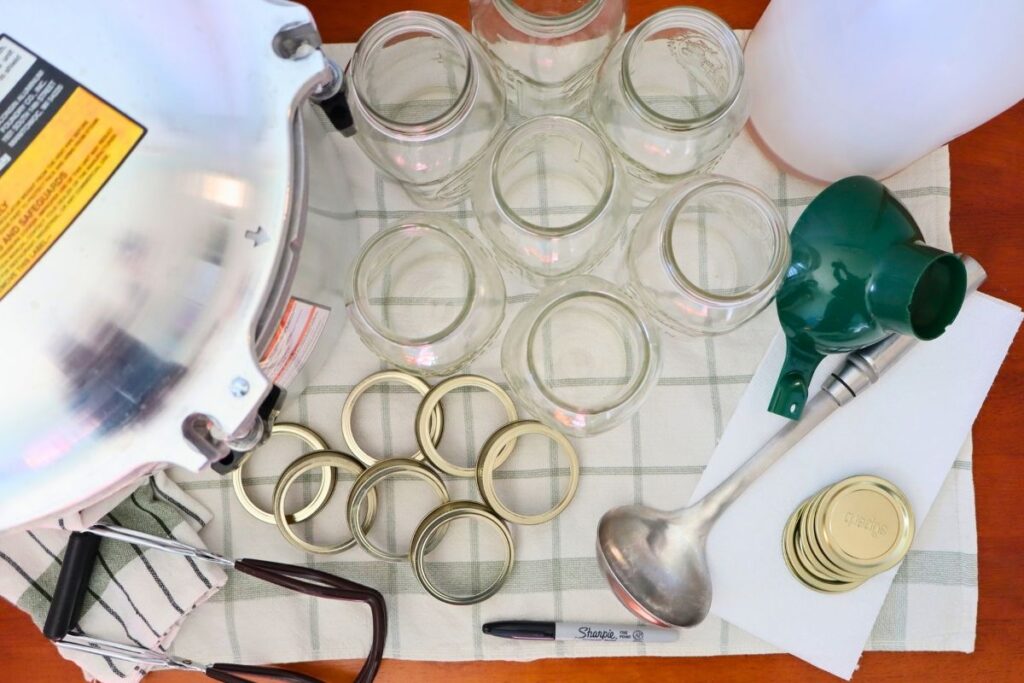
Before getting started, go ahead and grab all the equipment so it’s ready and within reach.
- Pressure canner
- Pint or Quart jars
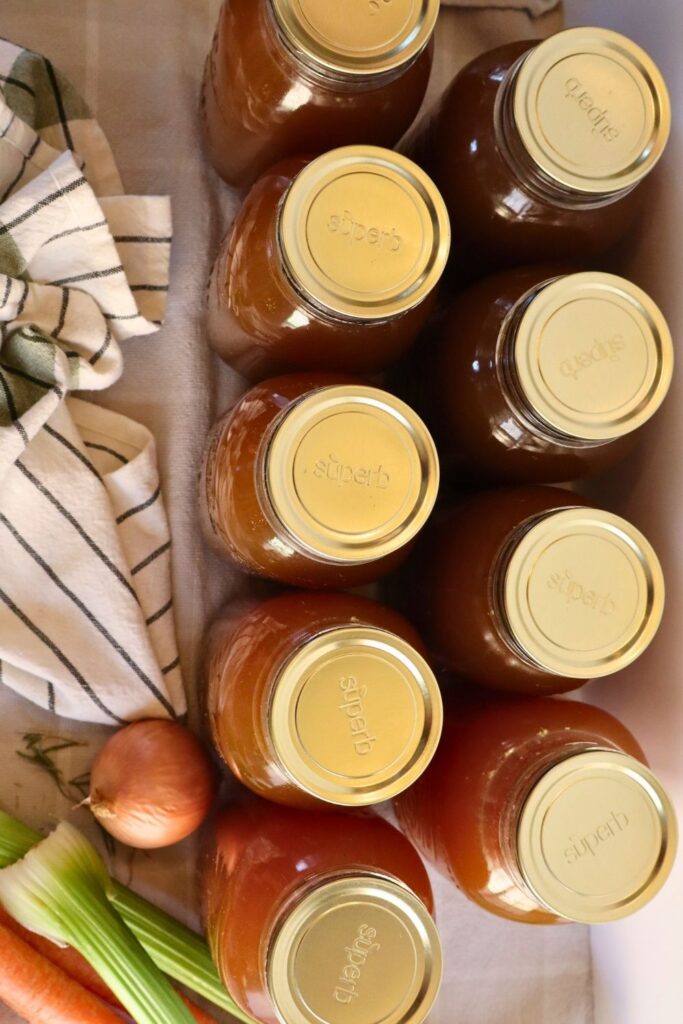
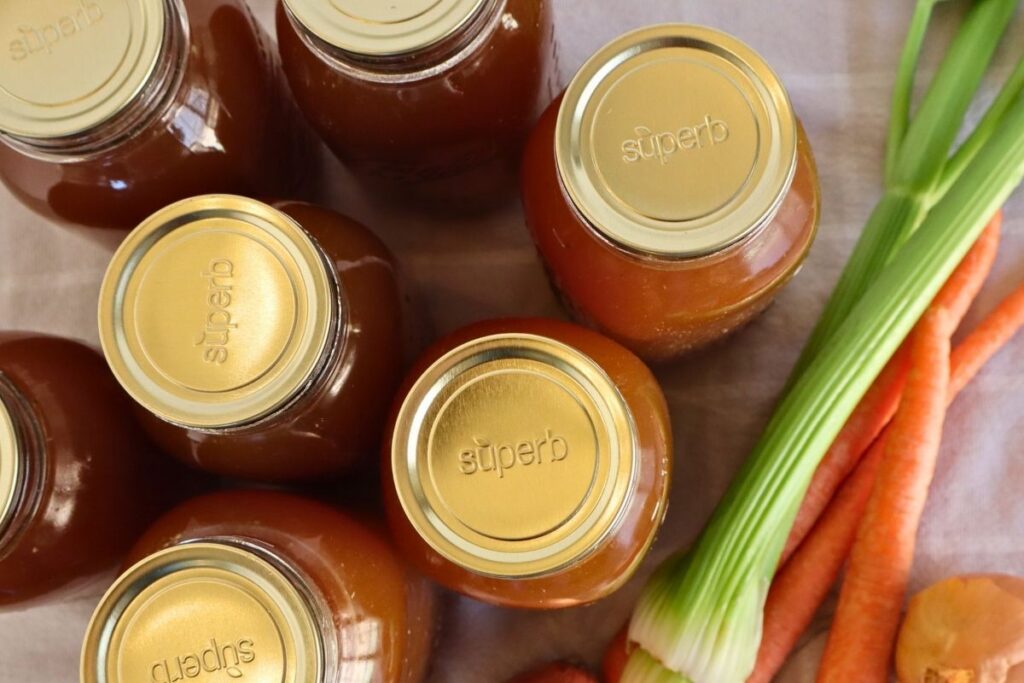
- Canning lids & bands (rings)* I love Superb brand
- Jar lifter
- Jar funnel
- Vinegar
- Paper towel or cloth
- Tea towel
A Note About Pressure Canners
I’m using an All American pressure canner, so the steps reflect how that style of canner works.
If you’re using a different canner, like a dial gauge model, the overall process is very similar, but some steps—like how you vent the canner or monitor pressure—may look a little different. It’s always best to follow the instructions that come with your specific canner.
How to Pressure Can Bone Broth (Step-by-Step)
You’ll need to start with fully cooked bone broth that has been chilled in the refrigerator (so that it’s easier to remove the fat layer). If you need instructions, here’s how to make bone broth on the stovetop or in an electric roaster.
Step 1. Prepare your jars
Wash your jars in hot soapy water and rinse well. Inspect your jars for any cracks, chips, or damage, especially around the top rim. (A chipped rim could inhibit a good seal). If the jar has any damage, don’t use that jar for canning. Once your jars are clean and inspected, keep them warm.
My favorite way to keep jars warm is to place them into the oven set at a very low temperature. If your oven has a keep warm setting, use that or set the temperature to 200°F.
A note on thermal shock:The reason that the jars need to be warm is because you are going to be putting hot broth into the jars which will go into a hot canner. If we were to put hot broth into a cold jar, it could cause thermal shock (which is caused by a sudden change in temperature) and could cause the jars to crack.
It’s best to always keep this in mind when canning—you want to avoid extreme temperature differences.
Hot food → hot jars → hot canner=✅
Hot food → cold jars ❌=risk of cracking jars
Hot food → hot jars → cold canner❌=risk of cracking jars
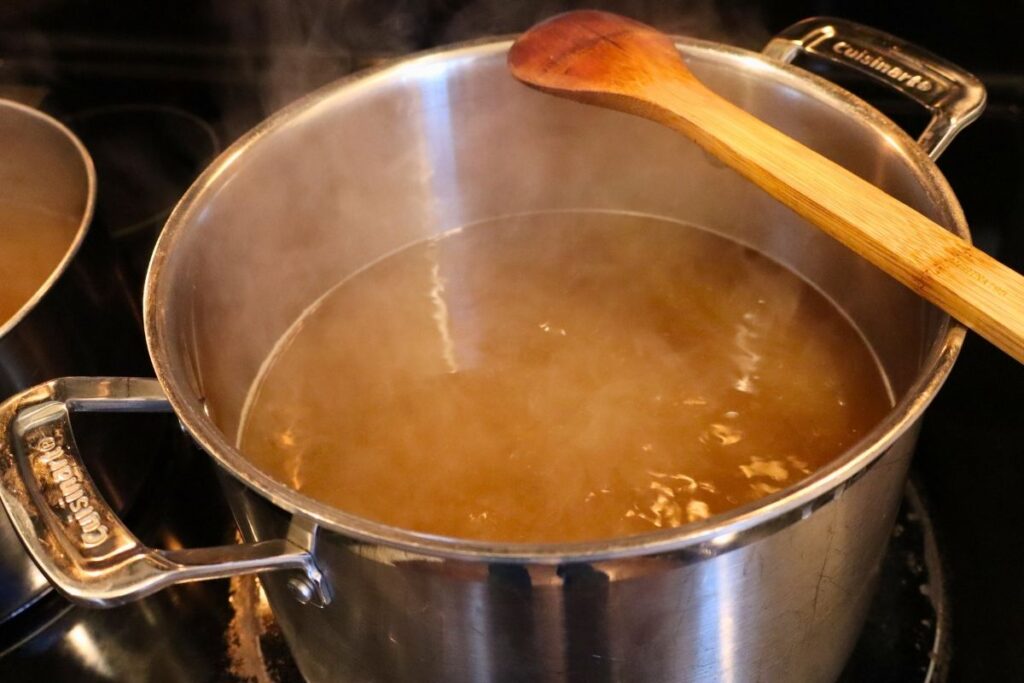
Step 2: Reheat and prepare the broth
After you’ve thoroughly chilled the broth, the fat will rise to the top and solidify. Skim off the fat from the surface.
At this point, your broth will likely be jiggly from all the natural gelatin. Before canning, gently reheat the broth on the stovetop until it reaches a gentle simmer.
If your broth didn’t gel, don’t worry—here are a few reasons why that can happen.
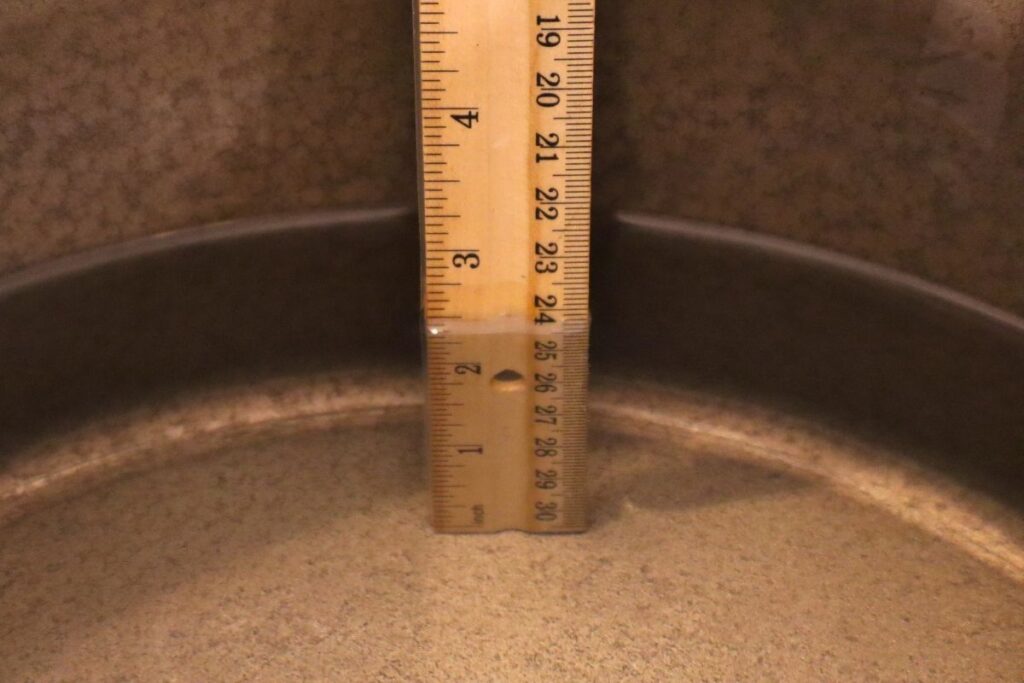
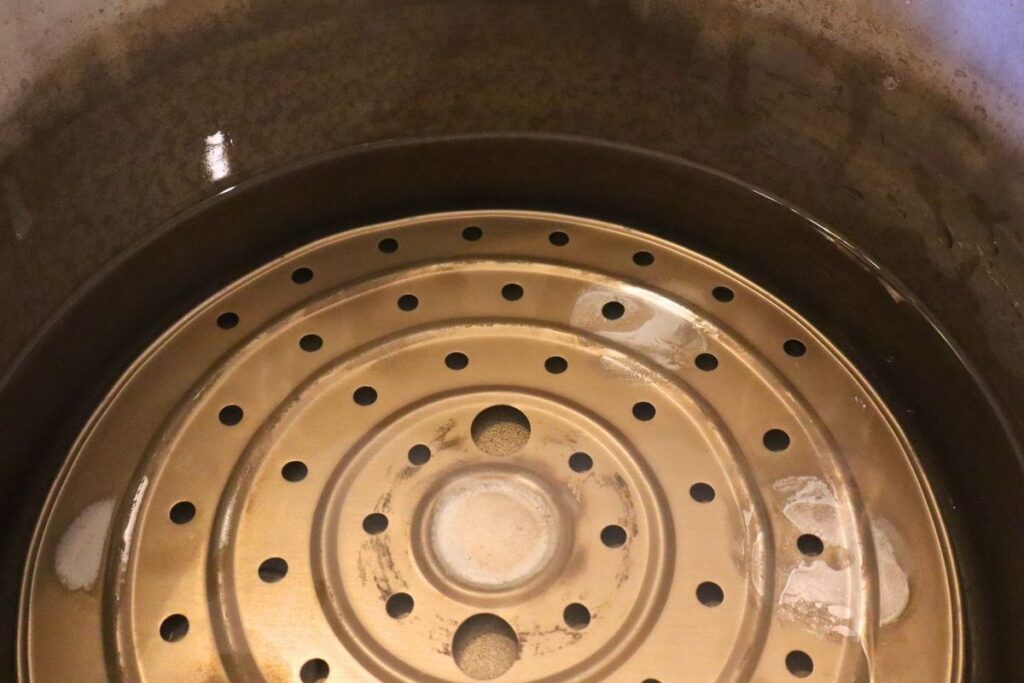
While the broth is heating, place the canning rack in the bottom of the canner. I add 2 to 3 inches of water to my pressure canner and start pre-heating the water in the canner so that it’s warm when the jars are filled and ready to go in. *Check your pressure canner instructions to determine the amount of water needed depending on your brand/style of canner.
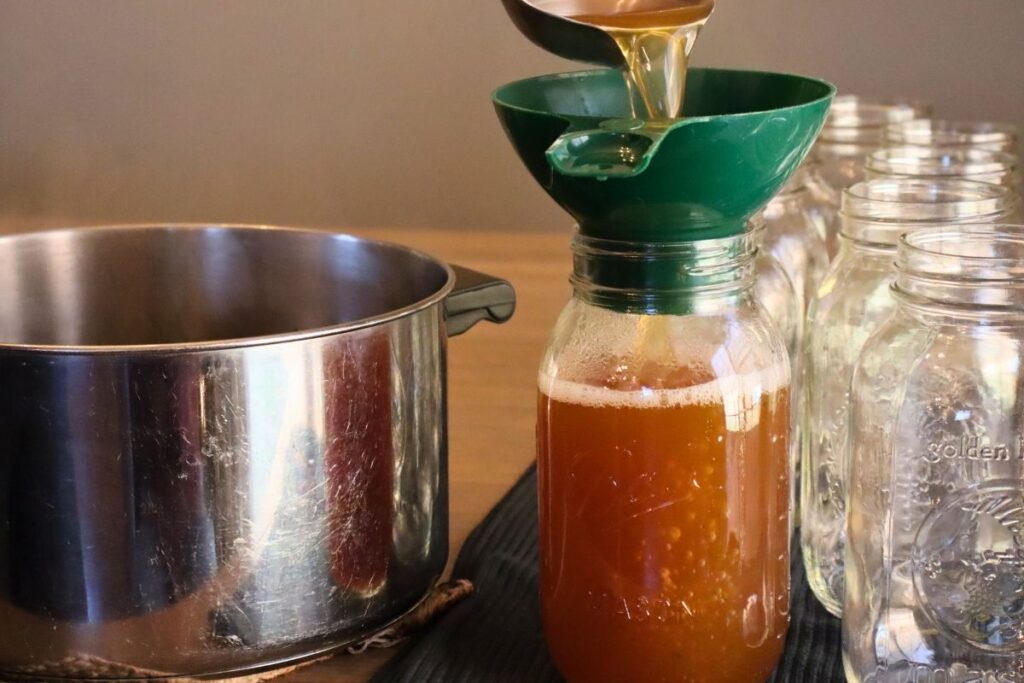
Step 3: Fill the jars
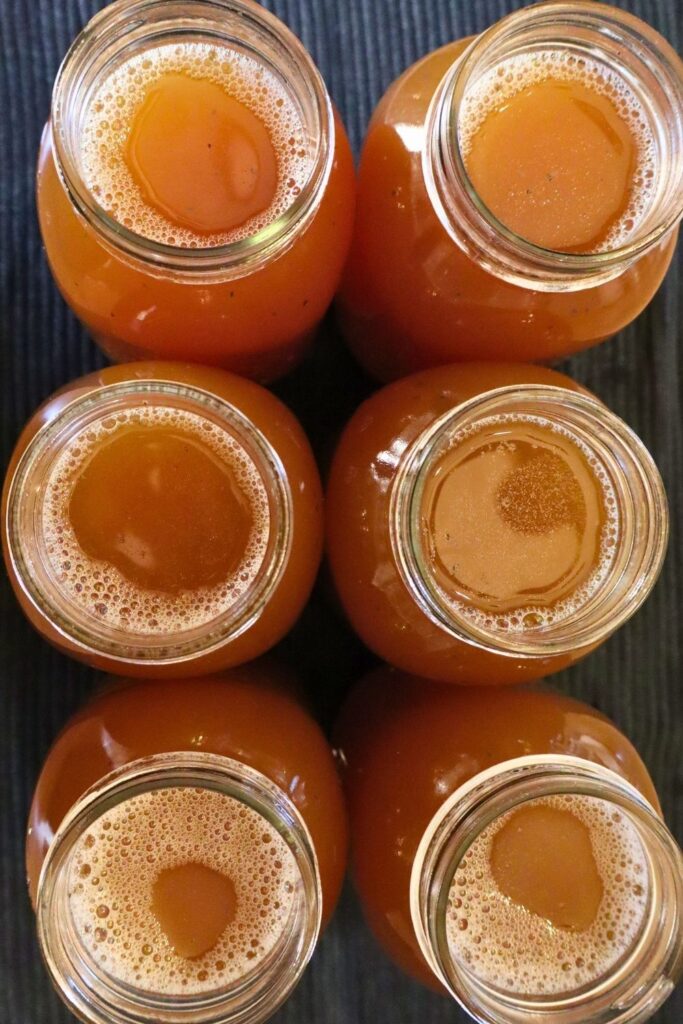
Place a canning funnel in a warm jar and carefully ladle the hot broth into the jars. Leave about 1 inch of headspace at the top.
Step 4: Wipe rims and place lids and bands
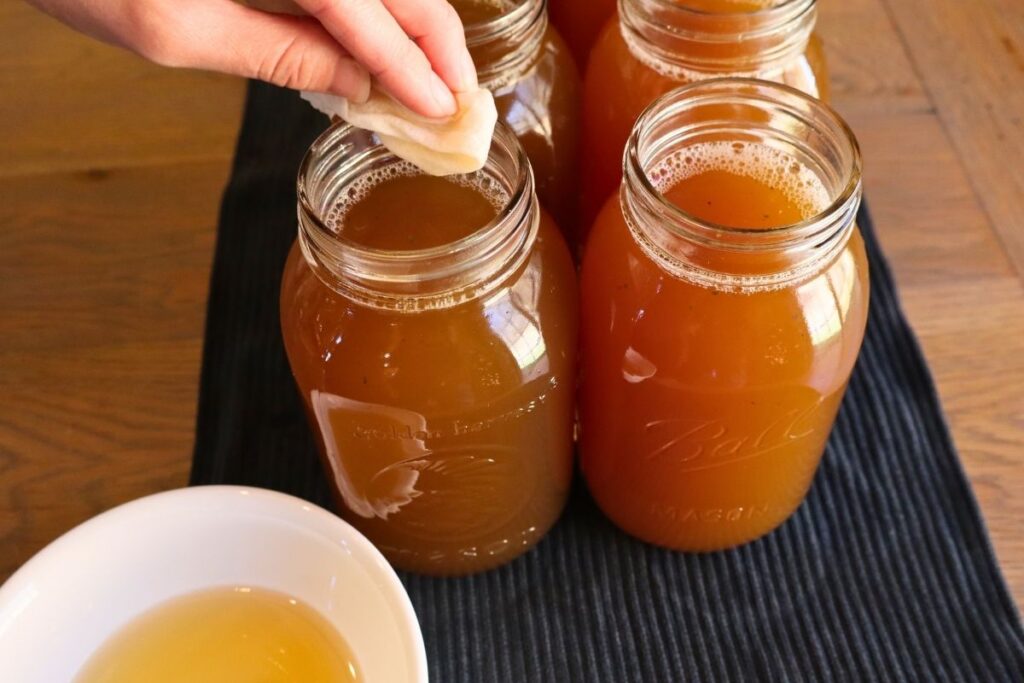
Once all the jars are filled, wipe the rims with a paper towel dipped in vinegar. This helps remove any residue so that the jars can get a good seal.
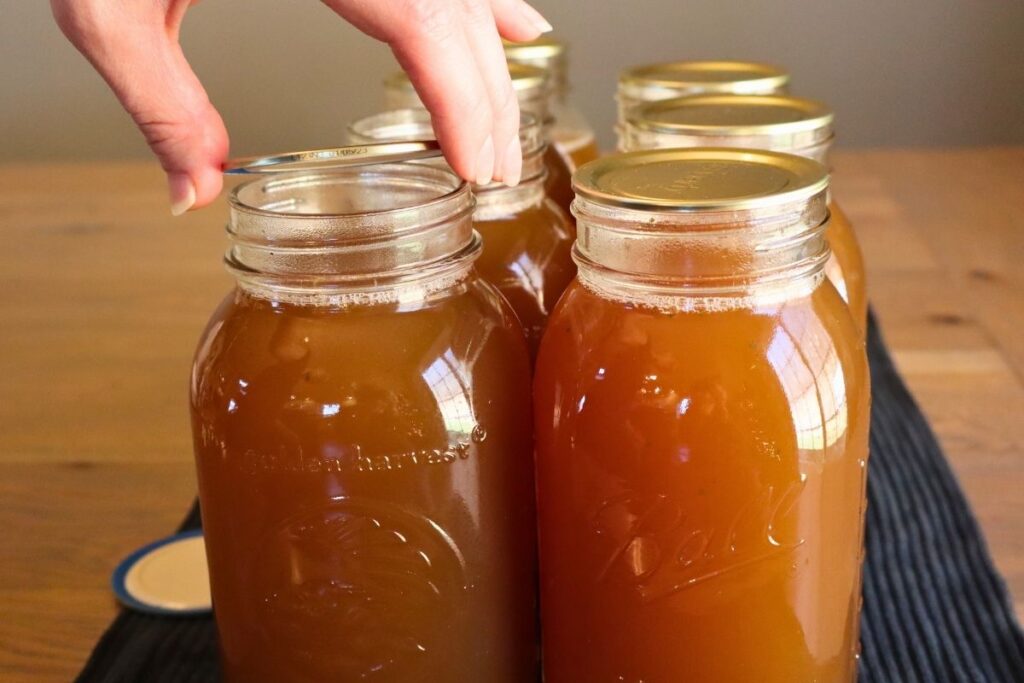
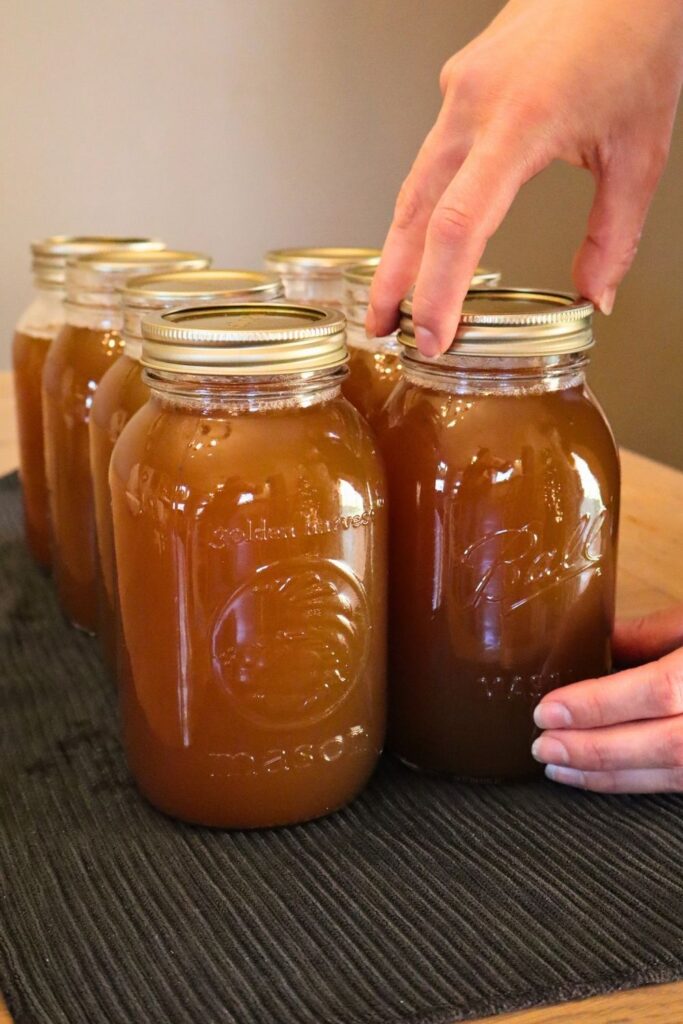
After rims are wiped and completely clean place the lids and bands on the jars. Tighten the band until fingertip tight. You don’t want to put the band on as tight as you can, only fingertip tight.
On the Superb brand canning lid box, it has a tip that shares how to keep from over tightening the bands that I thought was helpful called The Three Finger Method. Use only three fingers (thumb, index, middle finger) to tighten the band. I show how to do this in the photo above.
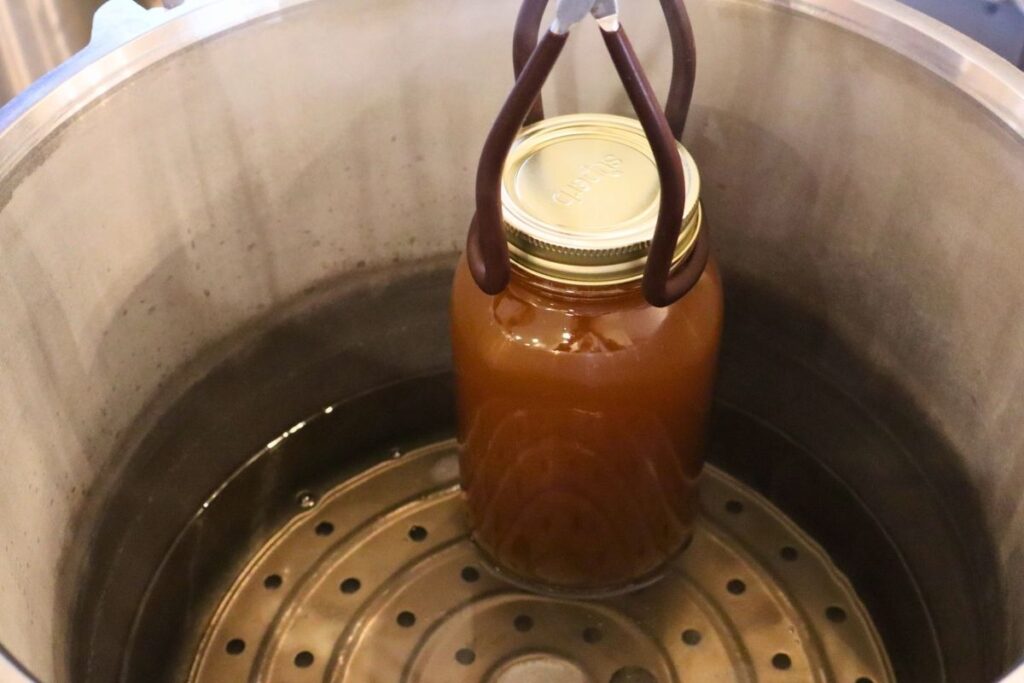
Step 5: Load the pressure canner and secure the lid
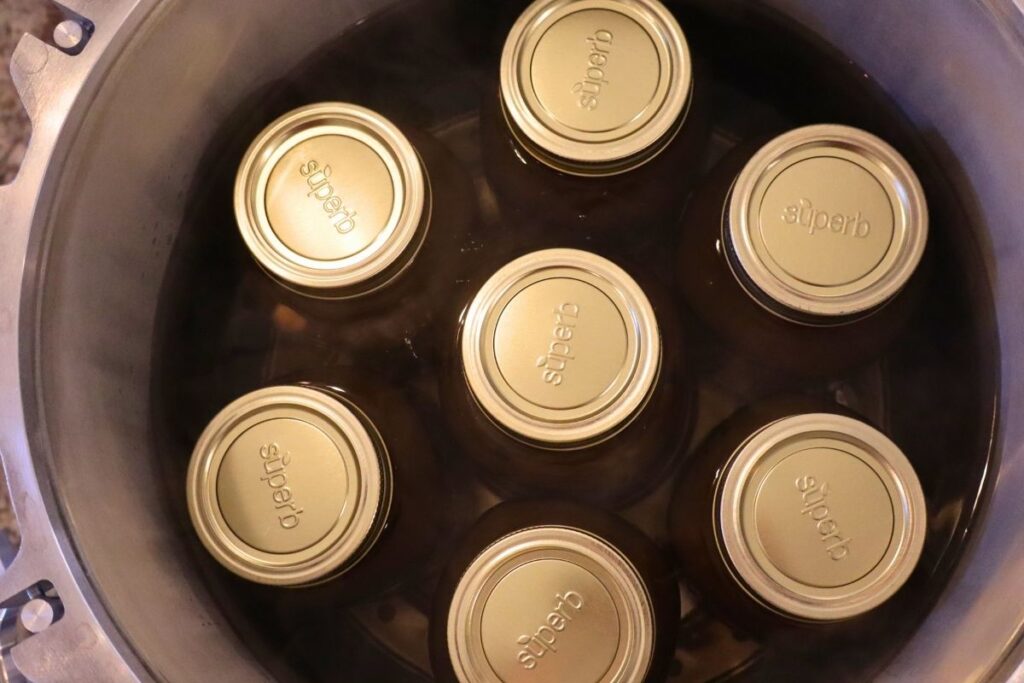
Using a jar lifter, place the jars into the pressure canner according to your manufacturer’s directions.
Before placing the lid on the canner, take a second to make sure that the vent is clear. You should be able to see through it easily. If anything is blocking it, you can clear it with a toothpick or similar object. This is a very simple but important step that you’ll need to do every single time you pressure can.
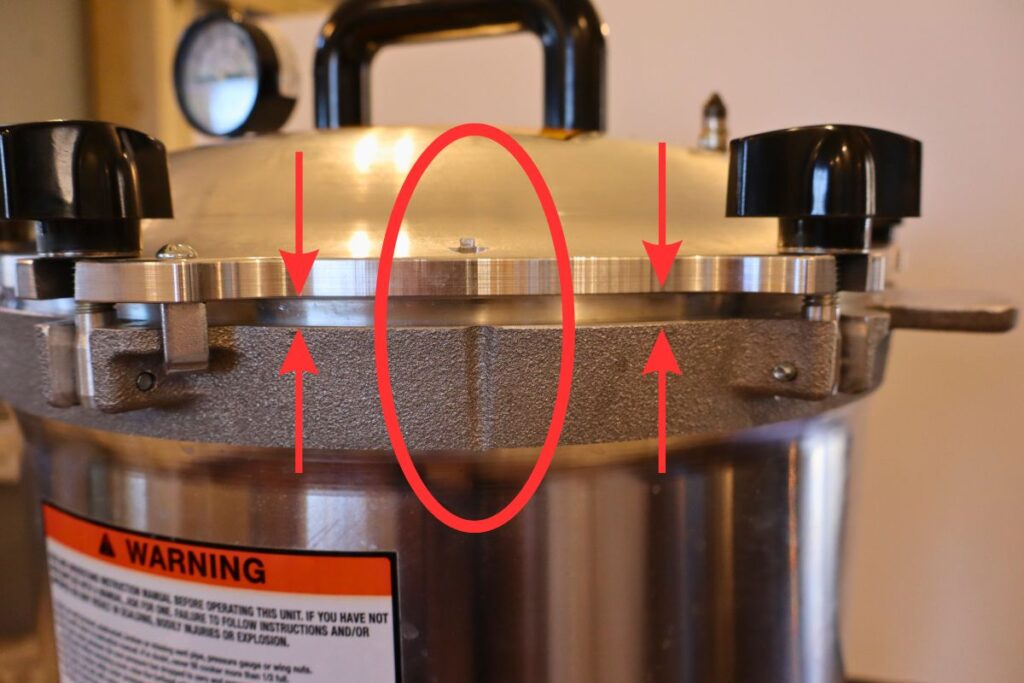
Put the lid on (follow your instruction manual). For the All American pressure canner—place the lid on top of the canner, lining up the mark on the rim of the canner with the arrow on the lid. (As shown in the circled area below).
Begin tightening the wingnuts, working in pairs across from each other. Start with 2 opposite wingnuts and tighten them evenly, keeping an even gap between the lid and the canner. (As shown in the picture below. Notice how the gap is even between the arrows). Continue with the remaining wingnuts the same way, tightening opposite sides until they are all snug and the lid is evenly sealed.
Note* Steps will vary depending on your pressure canner, so be sure to follow the manufactures instructions.
Step 6: Vent the canner and bring to pressure
With the heat set to high, allow the canner to vent steam. You are looking for a steady, consistent stream of steam coming from the vent before starting the venting time.
Once there is a steady stream, begin timing and allow the canner to vent for the recommended amount of time (for an All American pressure canner, this is 10-minutes—always follow the manufactures instructions).
After the venting time is up, carefully place the weight over the vent, using the correct weight for your altitude. Keep the heat on high and allow the pressure to build. Once you hear the first jiggle (movement of the weight) it’s time to start the processing timer.
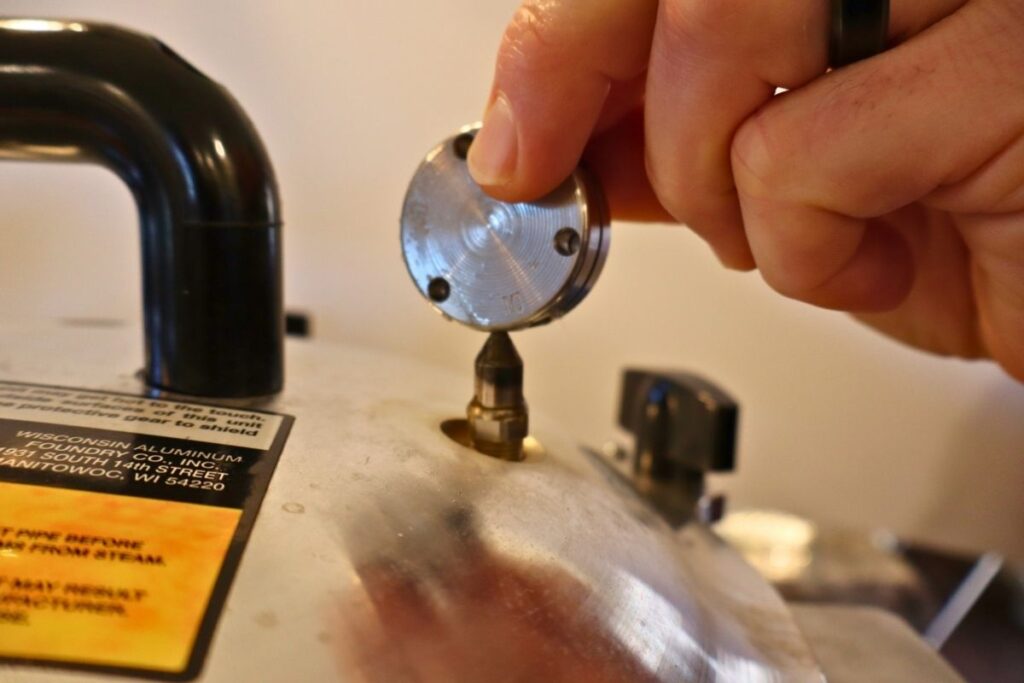
If you are canning pints, the processing time is 20 minutes.
If you are canning quarts, the processing time is 25 minutes.
You may need to slightly adjust the heat throughout the processing time. For the All American canner, you are aiming to hear 1-4 jiggles in a one-minute time frame. If you hear more than 4 jiggles, turn down the heat slightly—if you aren’t getting 1 jiggle per minute, increase the heat slightly. This can take a few minutes of adjusting to get the correct heat setting on your stove.
Step 7: Allow the canner to depressurize
Once your processing time is complete, turn off the heat and allow the canner to depressurize slowly. Do not take off the lid yet. Again, follow your manuals instructions.
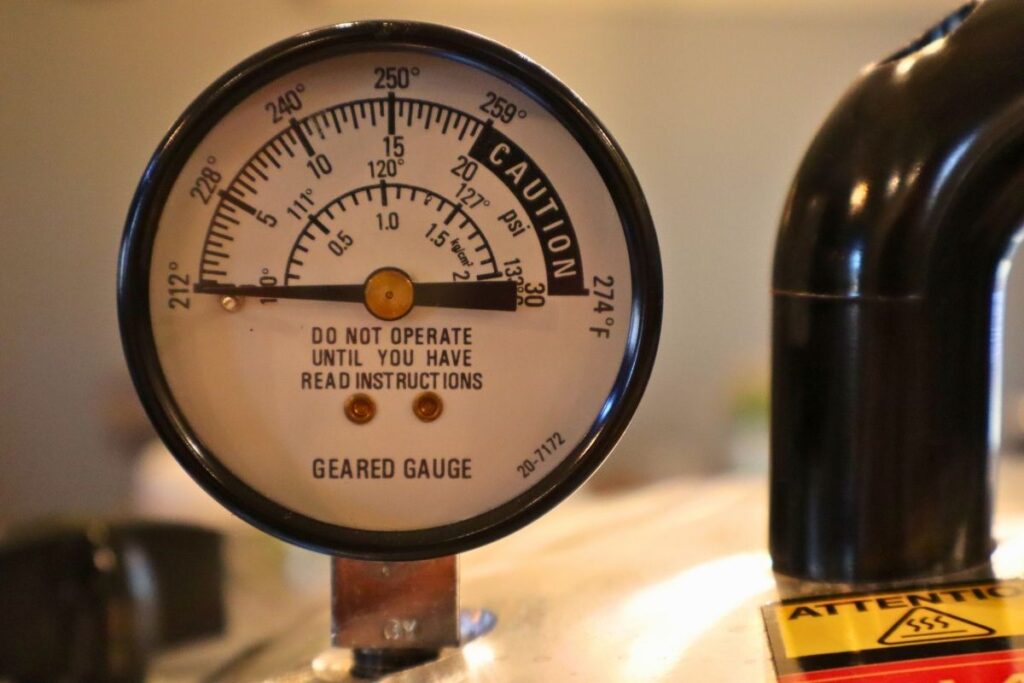
For an All American canner, wait until the canner reads 0 psi. Then use an oven mit to remove the weight. Wait 2 more minutes before opening the lid.
Carefully open the lid. Crack the lid away from you to avoid steam burns. I only crack mine slightly (as pictured below) to give my jars a couple extra minutes to help the temperature equalize. This helps prevent the jars from siphoning. (Siphoning can happen when there is suddenly a big difference in temperature).
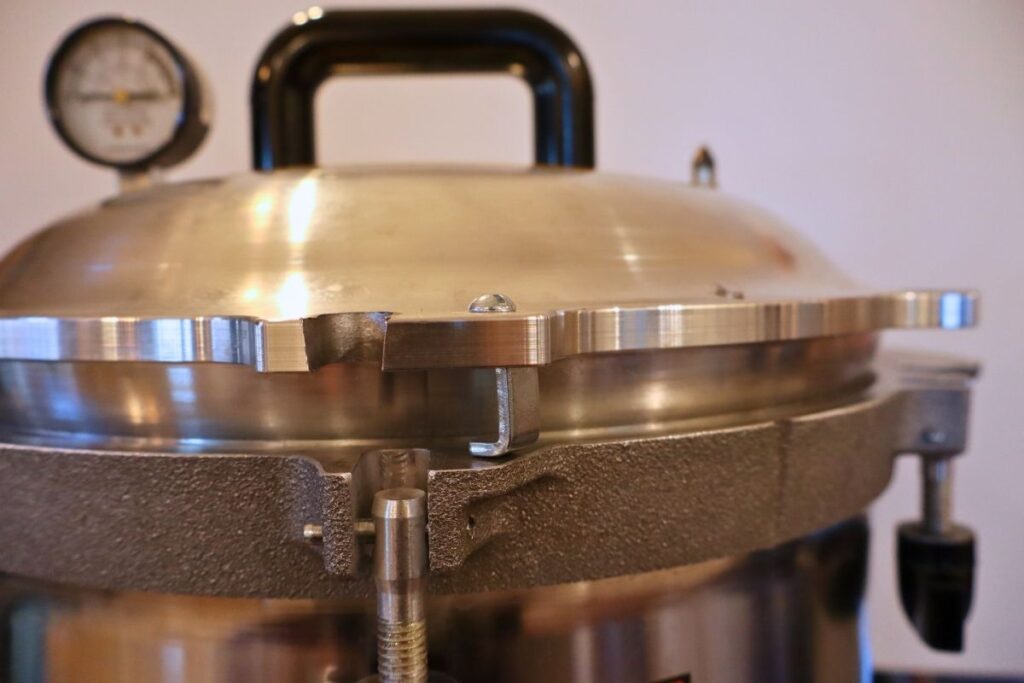
Step 8: Removing jars
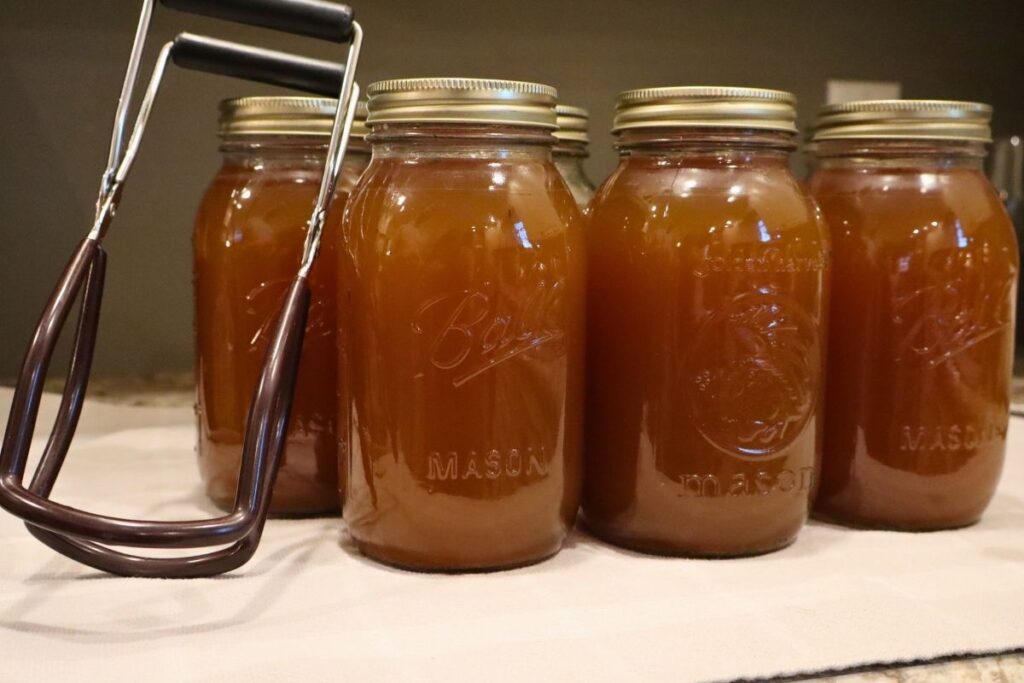
Using a jar lifter, carefully remove the jars and place them on a tea towel on a counter where they can sit undisturbed for the next 24 hours.
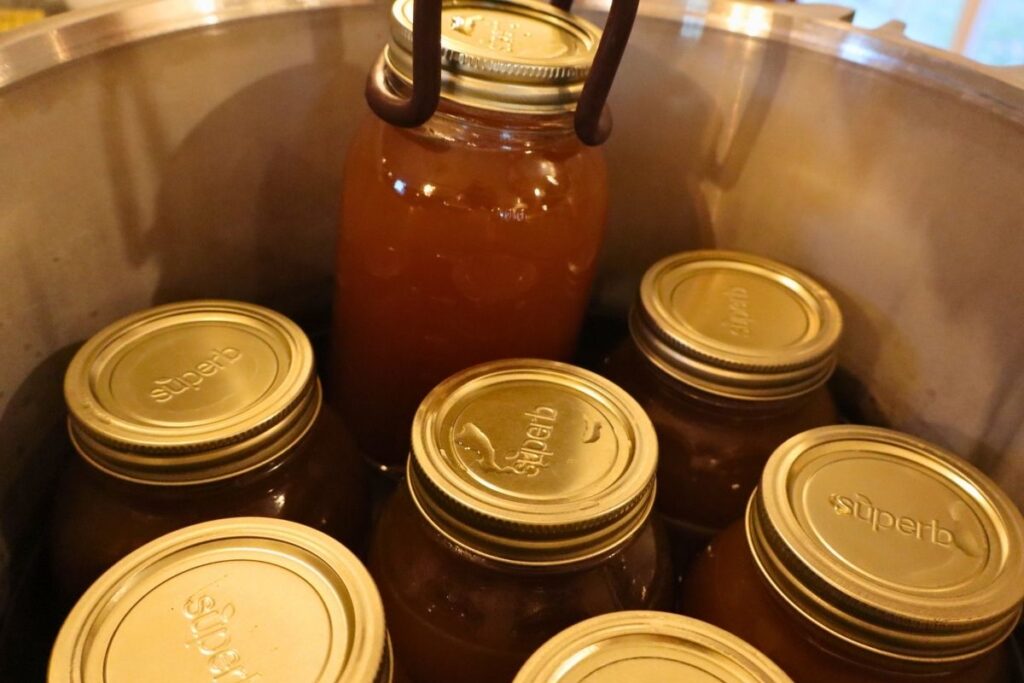
Step 9: Check the seals
After about 24 hours, it’s time to check the seals. Start by removing the bands, then check each lid. Press the center of the lid—it should not pop up and down and should curve downward. Another way to check the seal is to lift the jar carefully by the edges of the lid. A good seal can handle that test. (I check all of my canned goods that way).
If any jars did not seal:
• Refrigerate and use within a few days
•Freeze the broth
•You can also try to can it again. (Store in the fridge until you’re ready to pressure can it again). Reprocess it within 1 day and repeat all the steps again (reheat, use a clean jar, new lid etc.)
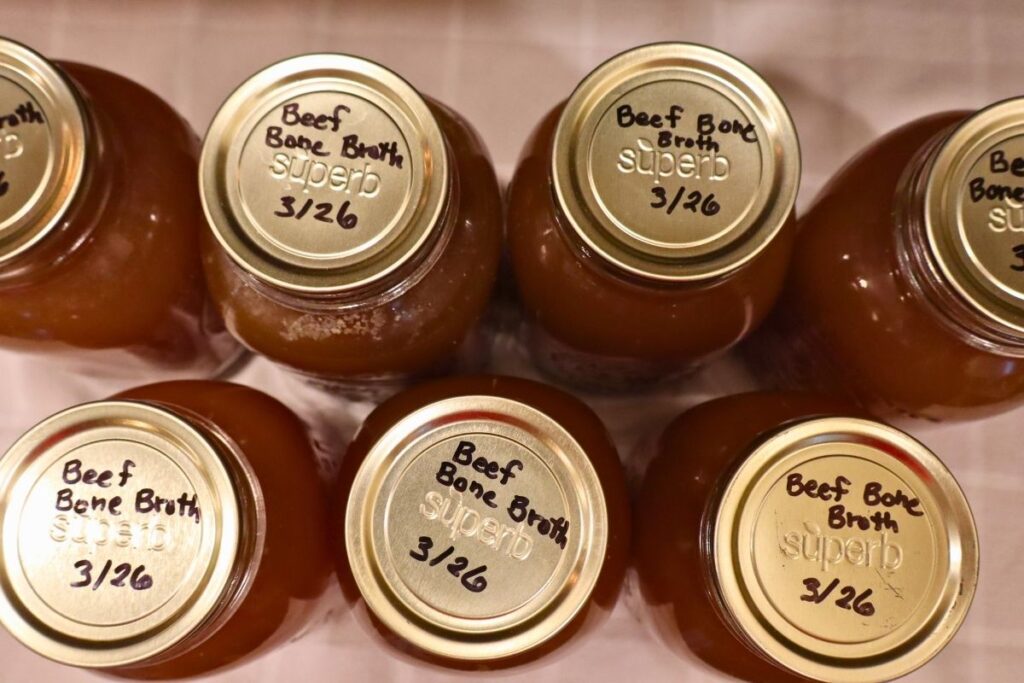
Once you’ve checked all the seals, label and date the lids. Store in a cool, dark place.
Safety Tips for Pressure Canning Bone Broth
To safely can bone broth, there are a few important tips you’ll want to follow every time.
• Always use a pressure canner, not a water bath canner for bone broth.
• Follow tested guidelines for time and pressure.
• Always check that the vent on the lid is clearbefore starting.
• Leave about 1 inch of headspacein the jars.
• Let the pressure release naturally—don’t try to rush it. Wait until the pressure is 0 psi before removing the lid.
• Check that all jars have sealed properly before storing.
•Always follow the manufactures instructions for your specific canner.
Best Practices for Storing Canned Bone Broth
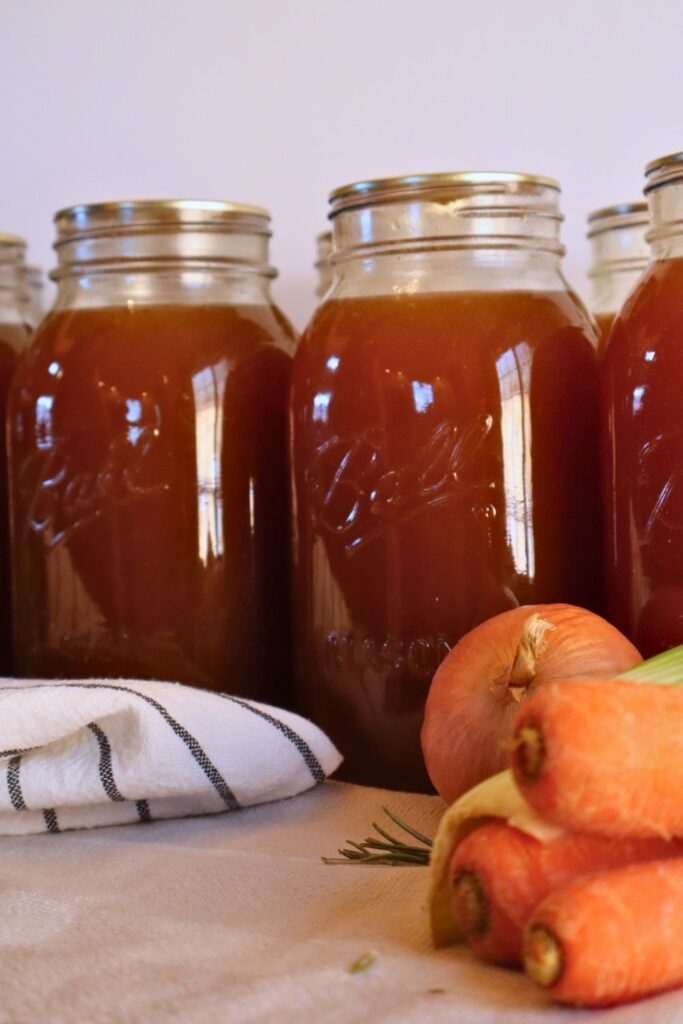
Once the jars have cooled and you’ve checked the seals, you are almost ready to put them into storage—but there are a few more things to complete for successful long-term storage.
Remove bands
If you didn’t already, remove the bands for storage.
Clean jars
If your jars have any hard water residue or feel sticky, do a quick wipe down of the jar and lid using a cloth dipped in water. (For sticky surfaces, try dipping your cloth in vinegar to clean the jar).
Label the jars
Using a permanent marker, write what your storing (chicken, beef bone broth etc.). Also date your jars. You may think that you’ll remember but you probably won’t.
Store in a cool, dark place
Store the jars:
- In a cool area (a basement, root cellar, pantry)
- Away from direct sunlight
- Away from heat sources
Canning vs. Freezing Bone Broth
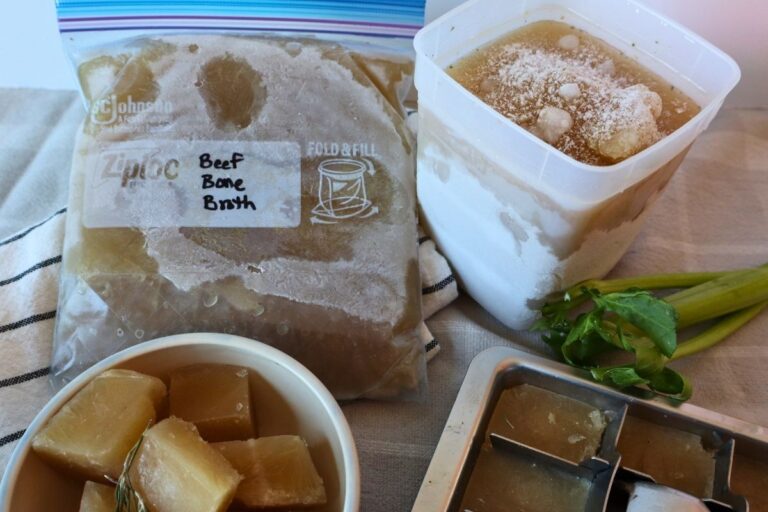
Pressure canning gives you shelf stable jars that are ready to use immediately—while freezing is a simpler option that is handy if you have some extra freezer space. I use both methods to stock my pantry. If I am really short on time, I will often freeze my broth. You can read my full guide on how to freeze bone broth for step-by-step instructions.❤️
How Long Does Canned Bone Broth Last?
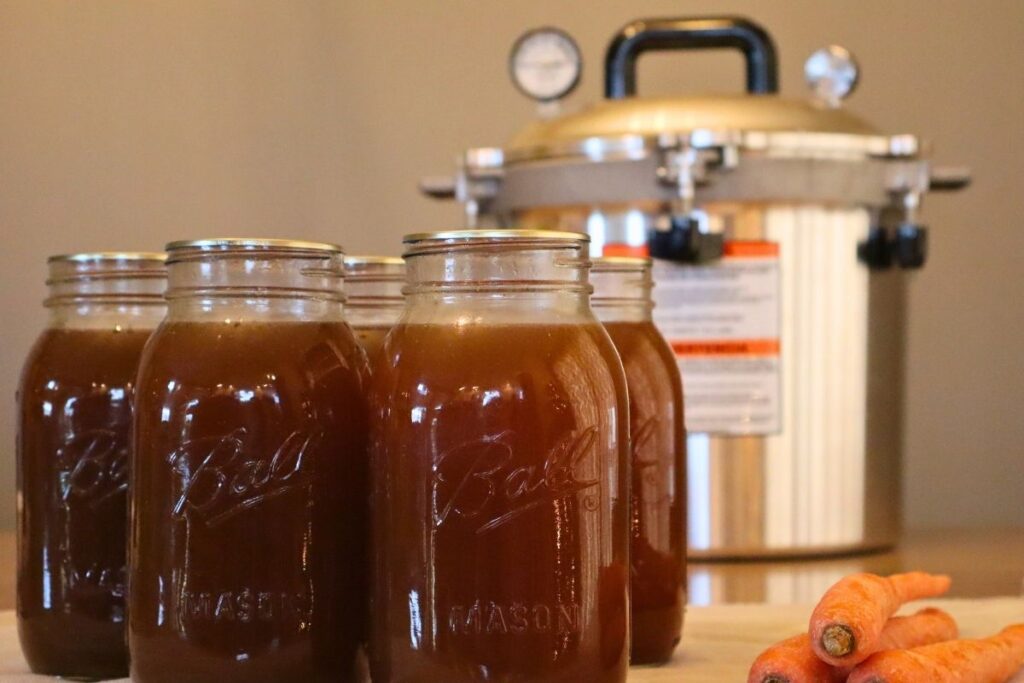
Canned bone broth will keep for 12-18 months when stored in a cool, dark place. After opening, store in the refrigerator and use within 3-5 days.
Always inspect each jar before opening. The lid should be sealed with no leaking or bulging upward. If there are any foul or unusual odors after opening, throw it out.
Frequently Asked Questions About Pressure Canning Bone Broth
Can you water bath can bone broth?
No, bone broth must be pressure canned. Because it is a low acid food, a water bath canner will not be able reach a high enough temperature to make it safe for shelf storage.
Why is there fat on top of my canned broth?
It’s normal for some fat to rise to the top of the jar after canning. As long as it’s sealed, it’s perfectly fine. If it is something you don’t prefer to have in your broth, try skimming the fat more thoroughly the next time before filling the jars.
How do I know if my jars sealed properly?
After the jars have sat for about 24 hours, press down on the center of each lid. The lid should stay down and not pop up. Another way to check the seal is to lift the jar carefully by the edges of the lid. A good seal can handle that test. ( I check all of my canned goods that way).
Do I need to refrigerate bone broth after opening?
Yes, once the bone broth is opened, store in the refrigerator and use within a few days.
What should I do if a jar didn’t seal?
If a jar didn’t seal, you can refrigerate it and use it within a few days or freeze it. You can also try to can it again. (Store in the fridge until you’re ready to pressure can it again). Reprocess it within 1 day and repeat all the steps again (reheat, use a clean jar, new lid etc.)
Having canned bone broth on the shelf is a simple way to stock your pantry with nourishing from-scratch food that’s ready whenever you need it. Once you get familiar with pressure canning it really isn’t as complicated as it may seem—and after doing it a few times, your confidence will grow and a whole new world of food preservation is at your fingertips! I hope these instructions and tips helped you and please know that I’m rooting for you, friend!