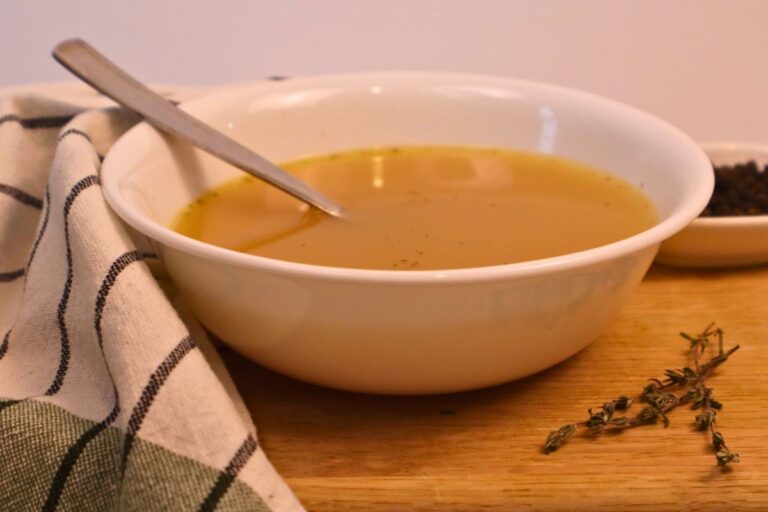
How to Make Bone Broth at Home (Complete Guide for Beginners)

Homemade bone broth is a simple from-scratch staple that adds nourishment and flavor to everyday cooking and makes good use of ingredients that might otherwise get thrown away. Whether you’re working with a leftover chicken carcass or pot of beef bones, learning how to make bone broth at home is a skill that is worth learning and you’ll come back to again and again.
In this guide, you’ll find everything you need to get started—from choosing the best bones, to different cooking methods, storage options, and how to troubleshoot common problems.
Note: This post may contain affiliate links. Please see our disclosure policy.
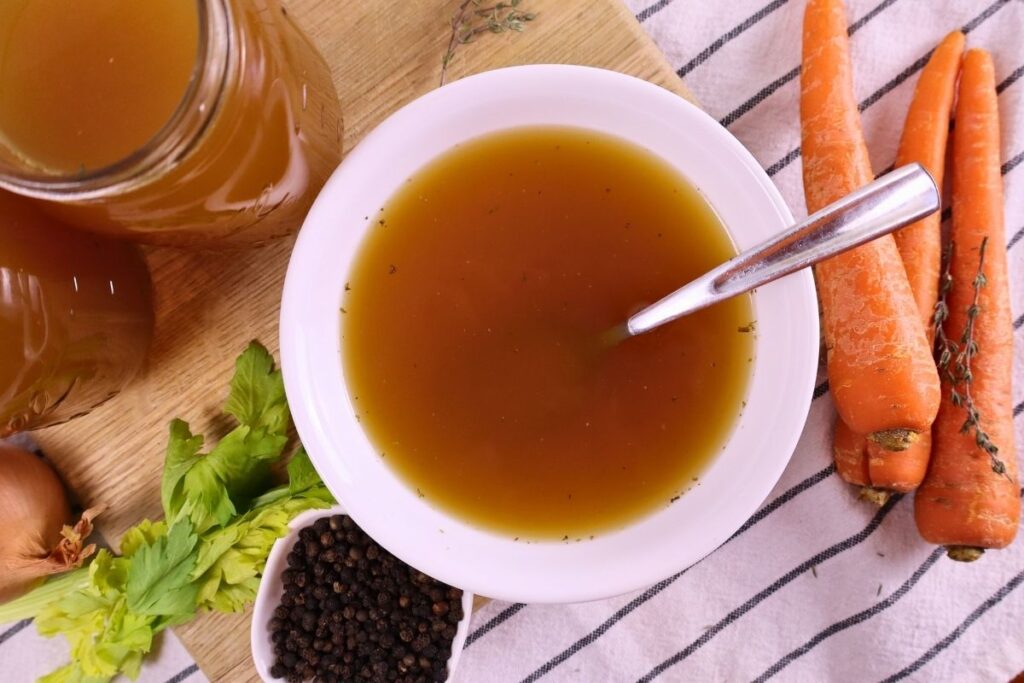
Bone broth is a yummy nourishing staple at our house. I wouldn’t want to be without it! I use it as a base for all of our soups, and it makes the best tasting broth! When I’m serving dinner, everyone always asks for extra broth in their bowls—it’s that good! Eating it is the easy part, but figuring out—sourcing bones, cooking methods, or how to freeze or can it—can be confusing when you’re just getting started.
When I first started learning about bone broth, I remember feeling a little intimidated by the whole process. But over time, I’ve learned that it’s really simple and not complicated once you get the hang of it. My goal with this guide is to simplify everything and help you get comfortable with the process faster. This guide goes over all things bone broth and links out to more in-depth step-by-step tutorials if you want to go deeper. I hope this guide helps answer all your questions and gives you the confidence to get started making bone broth.

Table of Contents
What is Bone Broth?
Let’s talk about the basics first. Bone broth is a nutrient dense beverage/broth that is made by simmering beef bones and connective tissues, vegetables, herbs, and spices in water for an extended amount of time. This time can range from 12-48 hours, sometimes longer. The long simmering process allows for the extraction of collagen, amino acids, and minerals. Typically, something acidic is added to the water to help extract the minerals as well, such as apple cider vinegar.
Because bone broth contains gelatin, amino acids, and minerals, people often drink it warmed in a mug for the health benefits. It’s also a great nutritious broth to add to soups, stews, and recipes to give your meals a boost in nutrition and flavor as well, which is how my family uses it. While it’s often compared to stock, bone broth is cooked for a longer period of time. This gives it a deeper more complex flavor and higher amounts of collagen, which often results in a thick gel-like texture after being chilled. I’ll dive into more of the differences between broth, stock, and bone broth below since they are often misunderstood.

Differences Between Broth, Stock, and Bone Broth
While broth, stock, and bone broth all share some similarities, let’s talk about their distinct differences.
Broth: Traditionally made from meat, along with vegetables and seasonings, and simmered for a short amount of time—between 2-4 hours. It has more of a lighter tasting profile.
Stock: Mostly made of bones, vegetables, and seasonings, and simmered for a few hours— between 4-6 hours.
Bone Broth- Almost the same as “stock” as it is bones, vegetables, and seasonings, but the big difference is that bone broth cooks for 12-48 hours. The longer simmer time extracts more collagen out of the bones—and collagen in the bones converts to gelatin in the broth, which is where it gets its jiggly texture that it’s known for. Bone Broth also has a deeper, and more complex flavor as well.
Why Make Bone Broth at Home?
- It reduces waste by using the bones
- It’s far more affordable than purchasing pre-made bone broth
- You get to control the quality of the ingredients and the flavors
- It adds richness and nourishment to soups and everyday meals
How to Make Bone Broth at Home (Overview)
I’ll share a quick overview of the basic steps to give you an idea of the process, and share links to detailed step-by-step instructions using different cooking methods.
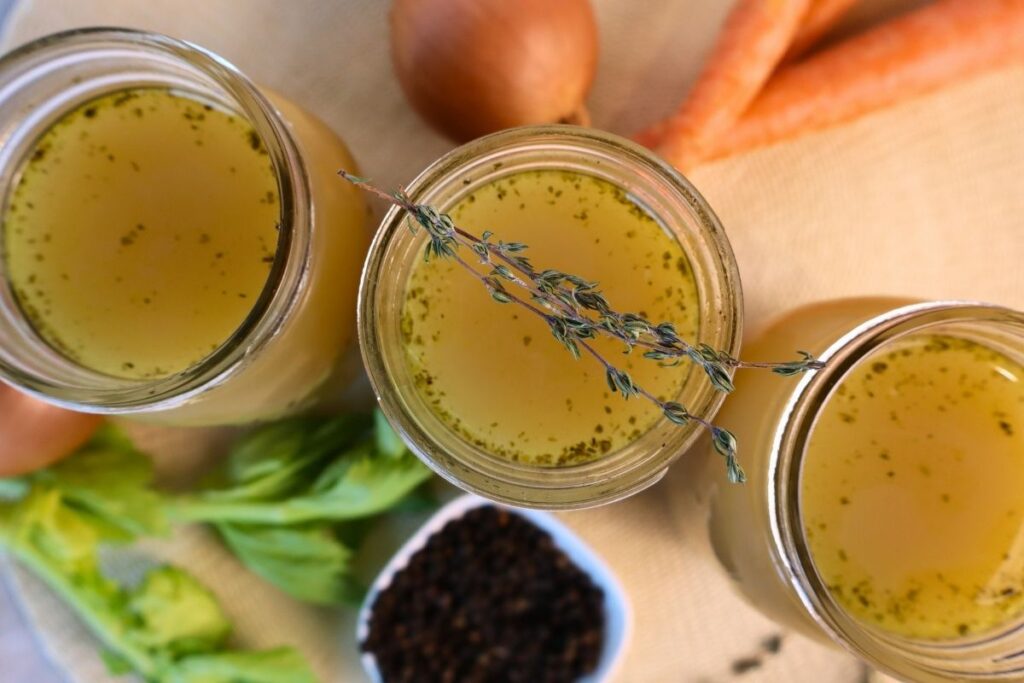
Bone broth is very simple to make; anyone can do it. You start with bones and roast them in the oven. Roasting the bones first is an optional step, but I highly recommend it. Place the bones in whatever you’re cooking them in (roaster, stockpot etc…) add vegetables, spices if desired. Cover everything with water, let them simmer low and slow for anywhere from 12-48 hours. Strain the bone broth and it’s ready to enjoy right away.
There are a few different ways to make bone broth—it all just depends on your needs, cooking equipment, and preferences.
• If you’re using the stovetop, you can follow this method for chicken bone broth on the stovetop
• For a larger batch, you might prefer chicken bone broth in an electric roaster
• For a rich beef bone broth, try beef bone broth on the stovetop
• Or for a bigger batch of rich beef bone broth, try beef bone broth in an electric roaster
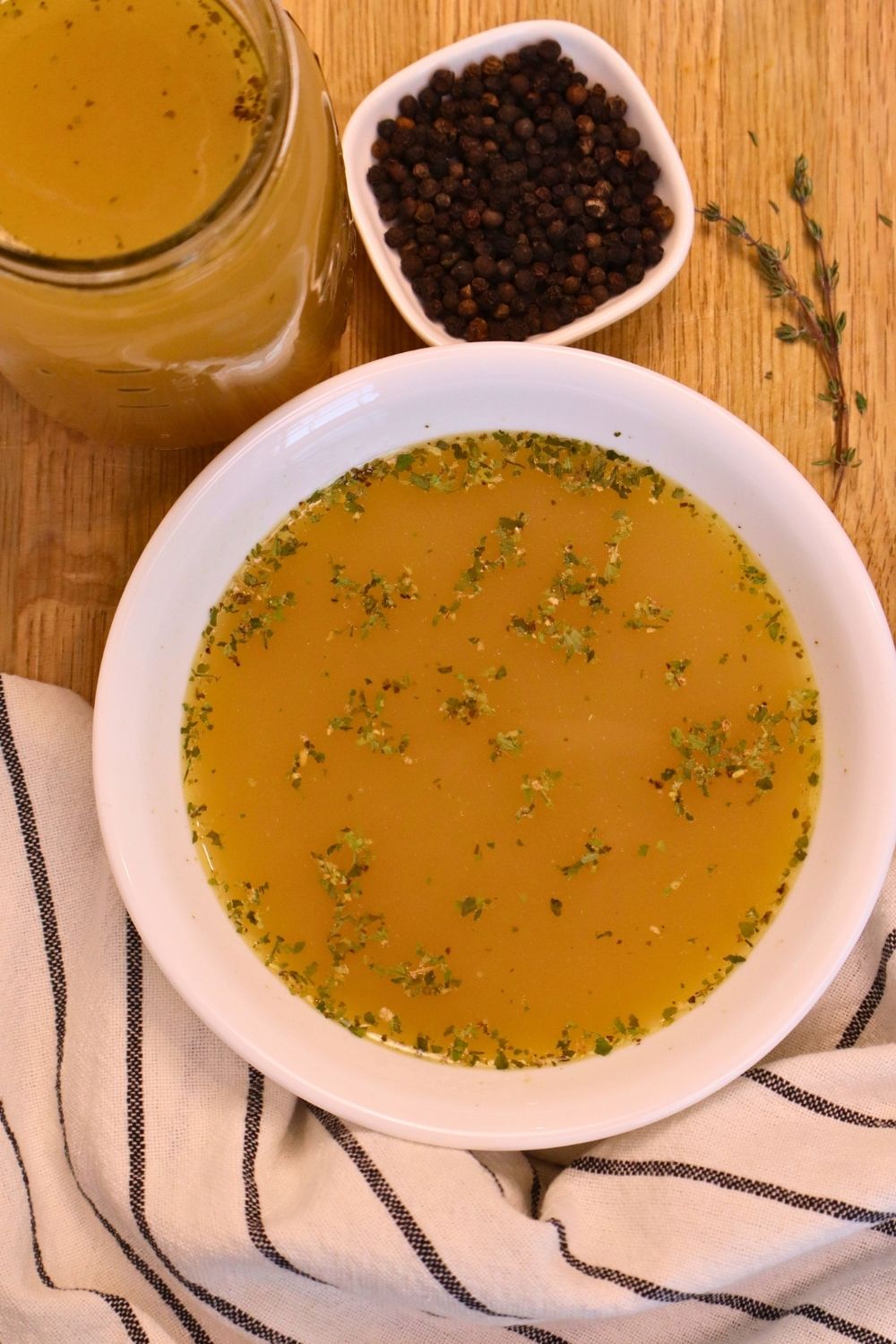
How Do I Make Bone Broth Without Leaving My Stovetop on Overnight?
Don’t feel comfortable leaving your stove on overnight to get that long simmer? Me either, so I came up with a plan that works to achieve a long simmer without leaving my stove on while I sleep. I’ve made a schedule that accommodates getting a nice long simmer time of 12-15 hours. It just requires a bit of prep on the evening before cooking day. To learn more about how I schedule that, see: Cooking Chicken Bone Broth in one day on the stovetop, or Cooking Beef Bone Broth in one day on the stovetop.
If you’re desiring a longer simmer time, or a way to make a larger batch, try using an electric roaster oven to make a Large Batch of Chicken Bone Broth or a Large Batch of Beef Bone Broth.

Chicken Bone Broth vs. Beef Bone Broth
Should you choose chicken or beef bone broth? Both! They are both tasty and worth making. It depends on which bones are easiest to source, and what type of soup or dish you plan to use the broth in.
The process to make bone broth is the same whether using chicken or beef bones, but the cooking times are different. Chicken is often simmered for a shorter amount of time than beef bones.
•Chicken bones simmer between 12-24 hours.
•Beef bones simmer between 12-48 hours. (For best results, aim for 24 hours or more).
Chicken does have a lighter overall flavor, whereas beef has a bit stronger, deeper flavor. Neither are better than the other, just different. I personally think chicken bone broth has a more neutral flavor which makes it more versatile—so it’s easier to use in more recipes.
Try using chicken bone broth in—Chicken taco soup, Chicken corn soup, Lentil soup, and Potato soup.
Try using beef bone broth in—Beef vegetable soup, Borscht, Chili, Beef Gravy, and Beef Potpie.
Best Bones for Bone Broth
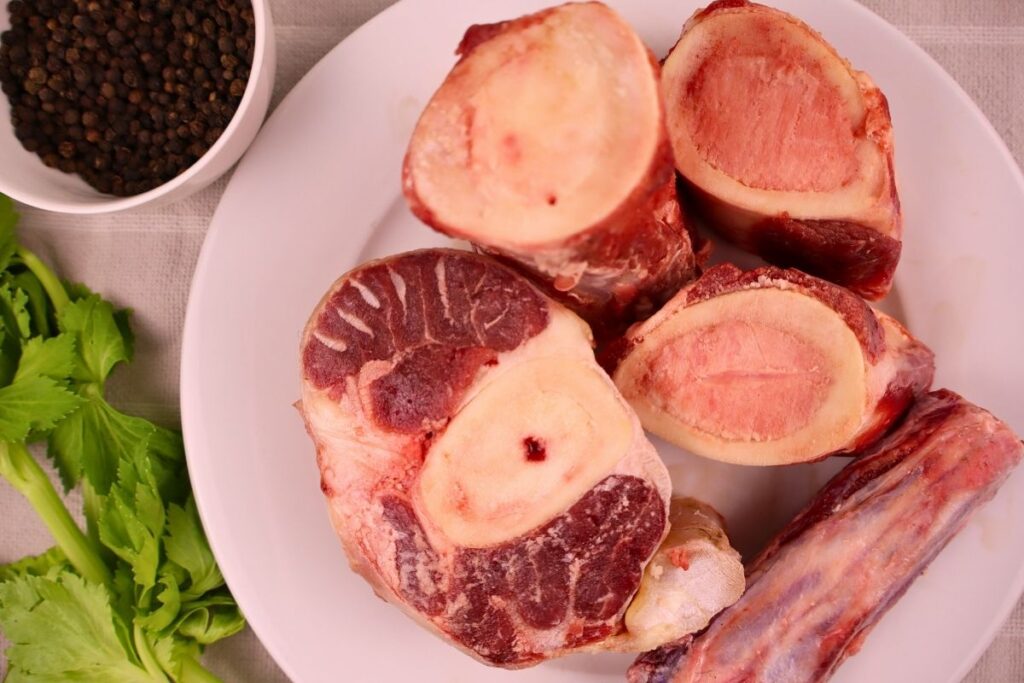
The type of bones you use make a big difference in flavor and how much gelatin your broth will contain.
Bones that contain connective tissue and joints help produce a broth with more gel.
Some examples of bones like this are:
- knuckle/joint bones
- beef neck
- oxtail
- chicken backs
- chicken wings
- chicken feet
Marrow bones add richness and flavor. It’s good to use a mixture of bone types for balance of flavor and gelatin.
If you’re not exactly sure what to look for, you can read more in my full guide with pictures on the best bones for bone broth.
Do You Need to Roast the Bones for Bone Broth?
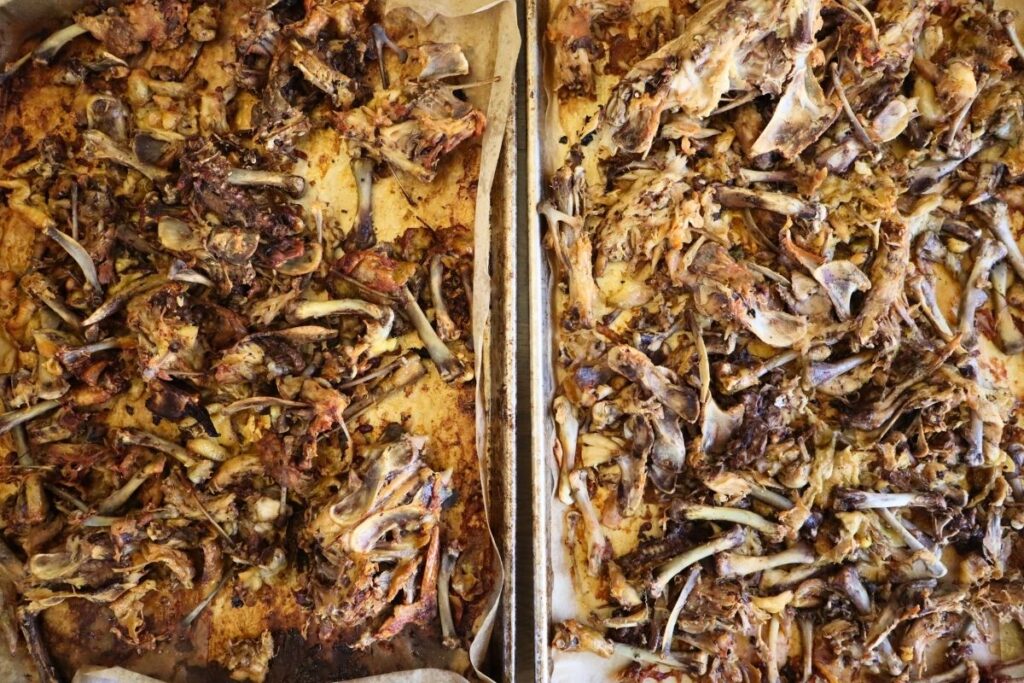
No, you do not have to roast the bones, but roasting the bones in the oven gives the broth a rich flavor. If you’ve never heard of roasting bones, it’s a pretty simple process. You place the bones on a sheet pan or in a 9×13 casserole dish and place them in the oven at a high temperature. I roast mine at 450°F.
As you roast the bones, natural sugars and proteins break down and caramelize—a process known as the Maillard reaction—which creates a savory taste. Think of a flavor similar to the crispy skin you get after roasting a whole chicken. That’s what it smells like—and it smells divine!
I personally think that taking the time for this extra step is worth it. If you’ve never roasted the bones for bone broth, I recommend that you try it at least once and see if you can taste the difference.

Why Your Bone Broth Isn’t Gelling
One of the most common questions about bone broth is—why didn’t it gel. Getting a jiggly bone broth is what bone broth is known for, and when that doesn’t happen it can be frustrating and confusing.
There are a few common reasons this happens:
- the ratio of water to bones was too high
- the types of bones used (too many marrow bones, not enough joint bones, etc.)
- not cooking long enough
If your broth didn’t turn out the way you expected, don’t worry—it’s a common issue.
You can read more about how to fix it here: 4 common reasons your bone broth didn’t gel.

How to Store Bone Broth
Once your bone broth is finished, you’ll need to decide how to store it.
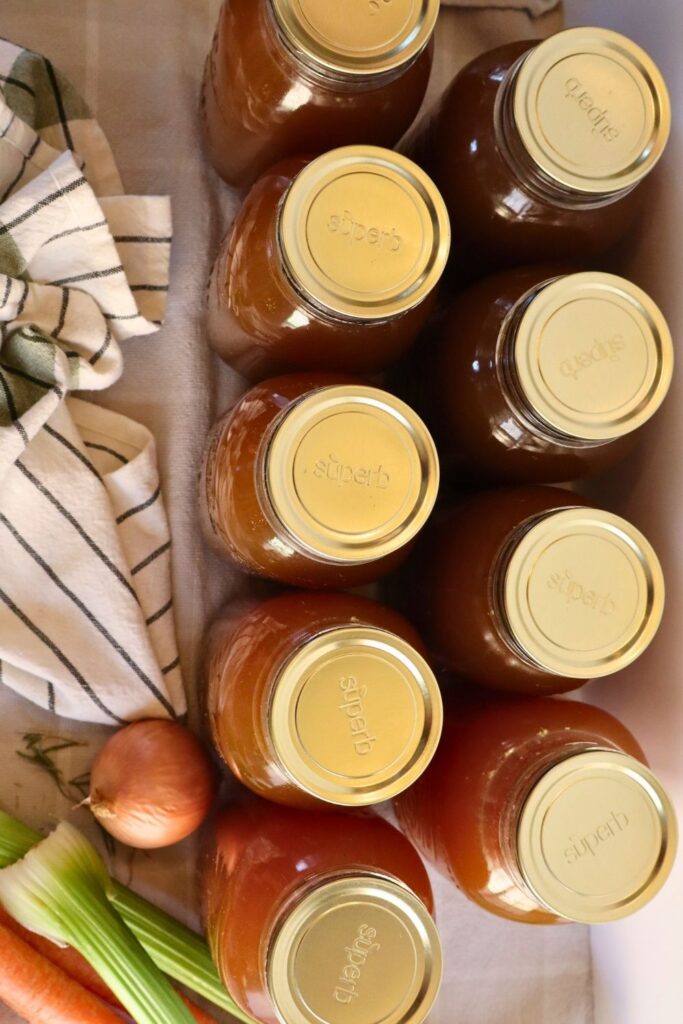
For short-term use, it can be kept in the refrigerator if you’ll be using it within a few days. For longer storage, freezing or pressure canning are both good options.
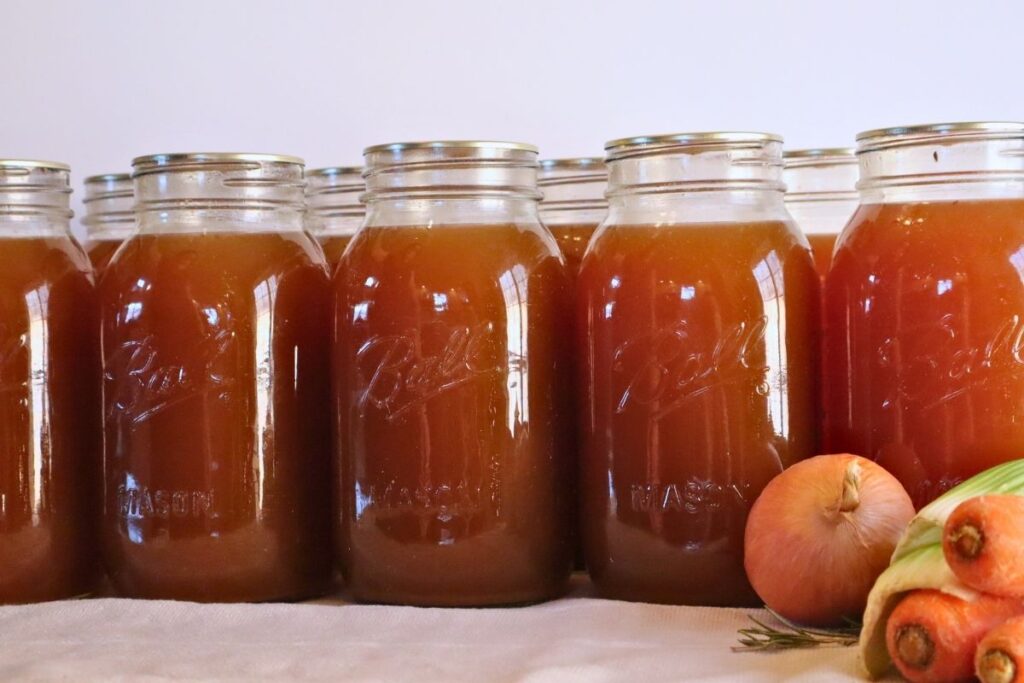
The best method depends on how much broth you’ve made, how much time you have for preserving, and how long you want to store the broth. Pressure canning broth is a more time-consuming process, but it also stores longer than freezing. Freezing bone broth is quick, but it doesn’t store as long as canned broth.
Both are great options; you’ll have to decide what makes the most sense for you. I do a mixture of both freezing and canning.

How to Freeze Bone Broth
Freezing is one of the easiest ways to store bone broth.
It allows you to portion it out in sizes that work for your individual needs. It’s easy to keep on hand for soups, cooking, or reheating as needed.
Freezing bone broth is very simple and easy to do:
• Fill containers, freezer bags, or ice cube trays (leave room for expansion)
• Place in freezer until solid
Frozen bone broth keeps well for about 3 to 6 months. It can last longer if stored properly, especially in a deep freezer at 0°F or lower but overtime the taste may start to decline.
For step-by-step instructions and tips, see: How to freeze bone broth
How to Pressure Can Bone Broth
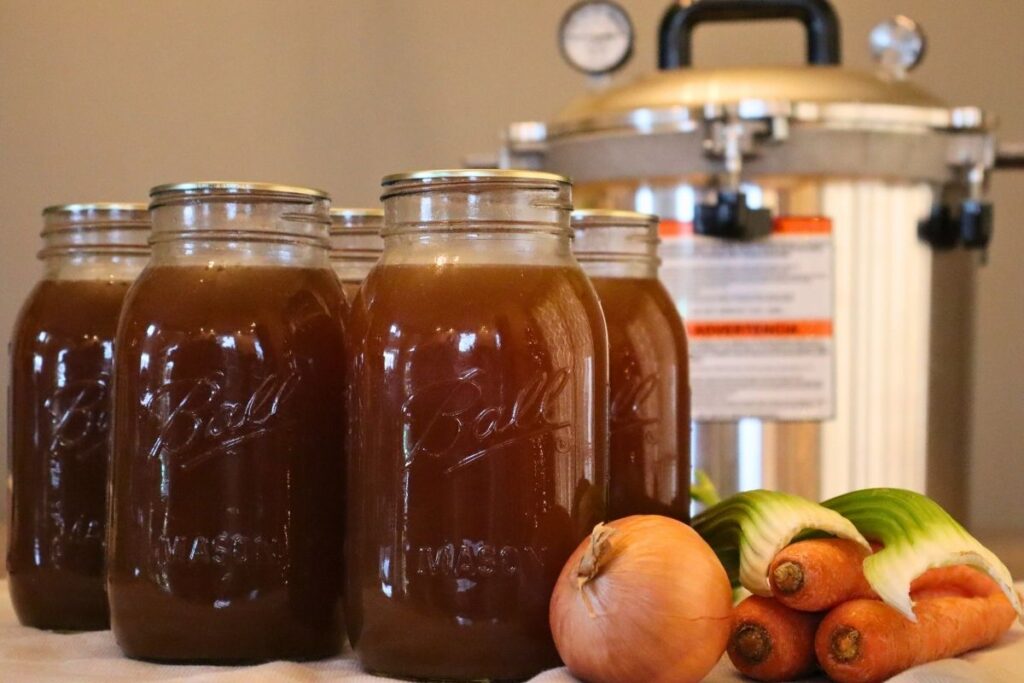
If your short on freezer space or you would like shelf-stable bone broth that stores for a long time, pressure canning is a great option.
Here’s a quick overview of how-to pressure can bone broth.
- Strain and reheat the broth
- Pour the bone broth into clean jars, leaving 1inch headspace
- Wipe the rims, place the lids and rings on
- Place in the pressure canner and follow safe, time-tested guidelines found in your canner’s manual
- When finished, the jars sit on the counter for 24 hours, and then check the seals
That’s just a quick summary—for my full step-by-step instructions, see: How to pressure can bone broth.
How to Use Bone Broth
You’ll love having bone broth on hand that’s ready to go! There is no shortage of ways to use it.
- Use it as a base for soups and stews (this is the way that I use it most often and it gives soups THE BEST TASTING BROTH!)
- Cook rice and grains in it for more flavor
- Use it in sauces or gravies
- Sip it warm on its own
Once bone broth becomes a regular part of your kitchen, you’ll never want to run out!

Frequently Asked Questions About Bone Broth
What is the difference between bone broth and stock?
Bone broth is simmered longer than stock, which helps extract more collagen from the bones and creates a thicker, gelatinous broth that’s very rich in flavor.
Stock is simmered for a shorter time and has less collagen (so less gelatin) and a lighter consistency.
How long should you cook bone broth?
Chicken bone broth is usually cooked for 12-24 hours, while beef bone broth is cooked for 12-48 hours. A longer simmer helps extract collagen for a gelatinous broth.
Why didn’t my bone broth gel?
Bone broth may not gel if there wasn’t enough collagen-rich bones used—such as joint bones. Other reasons could be—too much water was used, or if the simmer time wasn’t long enough. For more details and tips: 4 Reasons Bone Broth Didn’t Gel.
Do you have to roast bones for bone broth?
No, roasting is optional. But roasting bones adds a richer flavor. I think the extra step is worth it for a more flavorful broth.
What are the best bones for bone broth?
Bones with joints or connective tissues, like knuckles, oxtail, wings, whole chicken carcasses, and feet tend to give the most collagen, which is what gives your bone broth that famous jiggly texture. For more details see: Best bones for bone broth.
How long does bone broth last in the fridge?
Bone broth lasts about 4 to 5 days in the refrigerator.
Can you freeze bone broth?
Yes, bone broth freezes very well, and it’s an easy way to store it long-term. Learn more about how to freeze bone broth.
Can you pressure can bone broth?
Yes, pressure canning is a safe way to make bone broth shelf-stable so that you can store it long-term without any refrigeration.
What can you use bone broth for?
Bone broth can be used in soups, stews, sauces, for cooking grains, or simply on its own.
Can you water bath can bone broth?
No, bone broth should not be water bath canned because it is a low acid food. Therefore, it needs to be pressure canned.
Making bone broth at home might feel a little overwhelming at first, but once you go through the process a time or two, it quickly becomes second nature. It’s one of those simple, from-scratch staples that adds so much flavor and nourishment to everyday meals.
If you’ve been feeling unsure about where to start, I hope this guide helped simplify things and made it feel a little more doable. It doesn’t have to be complicated—and once you get the hang of it, you might find yourself making it more often than you expected.