Why Didn’t My Bone Broth Gel? 4 Common Reasons and Simple Fixes

After simmering bones for hours, it can be a huge disappointment to open the fridge to find that your broth is still liquid, with no jiggle. If you're searching for the answer to why didn't my bone broth gel, there are several common reasons that I'll explain and help you troubleshoot the issue. I'll provide simple tips to help your next batch turn out gelatinous!
Note: This post may contain affiliate links. Please see our disclosure policy.
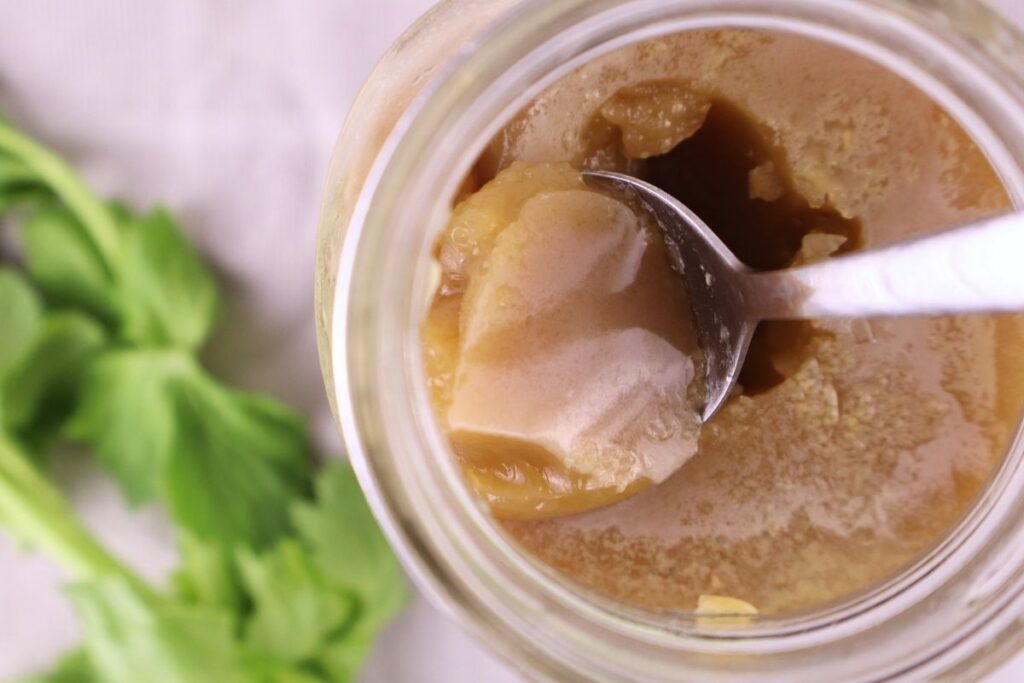
Homemade bone broth is famous for its jelly-like texture once chilled. But what about when you open the refrigerator to check on your bone broth and find a broth with no jiggle and instead you find a liquid that resembles regular broth or stock? And you wonder why didn't my bone broth gel?
I've been there before and it still happens to me every now and then. I'll try to explain the most common reasons that it happens and ways to increase your chances of getting a gelatinous broth next time. I'll also share one way to try to fix your broth right now.
For me personally, I think one of the most common issues is that I add too much water back to my broth as it evaporates while cooking. I'm trying to get more quantity of broth, but in the end, I have diluted the gelatin. It's still good though and that's the most important take away from this post. Although we all desire to produce a gelatinous broth every time, sometimes it just doesn't gel the way we hoped it would. But a bone broth that doesn't gel is still nourishing, delicious, and useful in cooking. So, use it anyway and try some of these tips for next time!
If you’re new to making bone broth, you can learn my full methods for making beef bone broth using my roaster method or my simple stovetop method.

What Makes Bone Broth Gel?
Collagen turns into gelatin
The collagen which is present in the bones, joints, and connective tissues break down into gelatin during the cooking process. When chilled in the refrigerator, the gelatin forms a soft, jelly-like structure giving the broth it's signature gel like thickness.
Simply— simmering bones for a long amount of time helps extract collagen.
Collagen (in the bones) converts to ➡️gelatin (in the broth).
The more collagen extracted = a stronger gel.
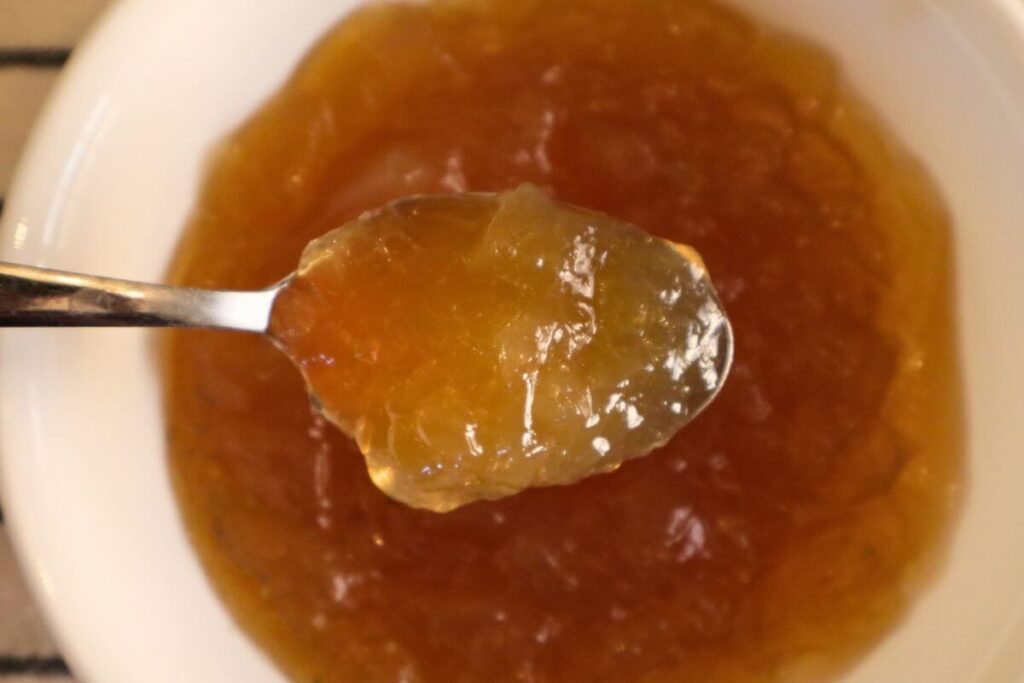
The Spoon Test for Gelatin
If you're wondering if your broth has any gelatin before it finishes simmering, the spoon test is a quick, easy way to check. To do this, scoop a small amount of broth onto a spoon and let it cool slightly. After its cooled down (don't burn your fingers please!) rub the broth between your fingers. Let it dry on your fingers. This may take a few minutes. If it feels slightly tacky or sticky, that's a good sign that gelatin is present.
If you don't feel any stickiness you may want to continue simmering the broth a little longer. If that doesn't do it, that may be a sign that you don't have enough collagen-rich bones, and that you may need to use more next time. I wrote a detailed explanation on the best bones to use for bone broth that explains the different types of bones and what I recommend using for the best results.
Table of Contents
4 Reasons Your Bone Broth Didn't Gel
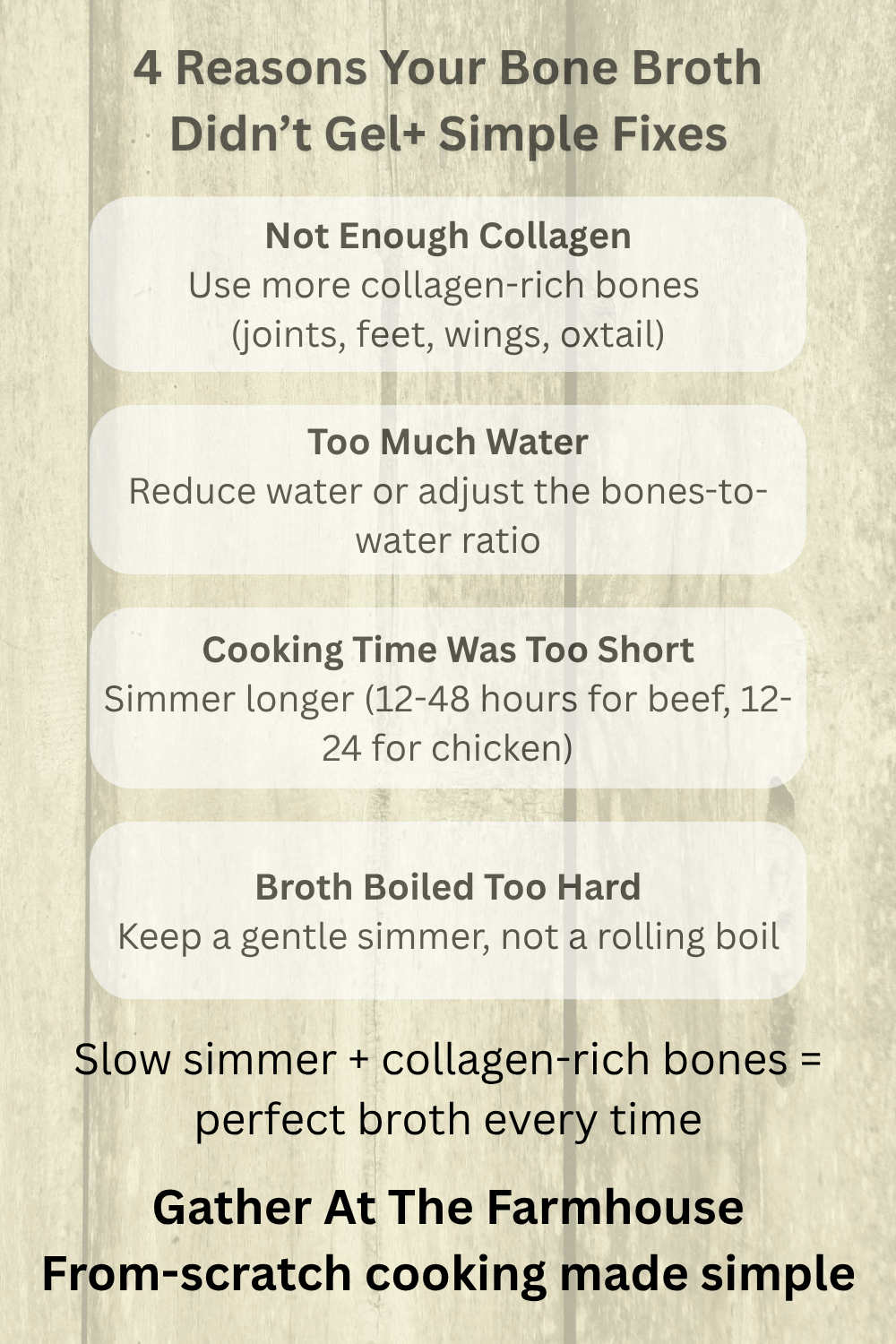
1. Not Enough Collagen-Rich Bones
In order to achieve a gelatinous broth, you need to use the right types of bones. You want to be sure to add plenty of joint bones to your broth. Aim to use at least half joint bones or more in your bone selection.
For chicken broth use wings, necks, backs, and feet. An easy way to do this is to roast a whole bird, remove the meat to use for dinner and then use the whole chicken carcass in your broth. For beef bone broth, add more knuckle bones (any joint bone) oxtail and neck bones.
2. Too Much Water
This is the one that happens to me most often. Adding to much water and not enough bones will in the end dilute the amount of gelatin. It's just like adding extra water to a package of Jello dessert—it results in a soupy mess instead of the firm jiggly texture we expect with Jello. This can happen with bone broth primarily in two ways.
- The water-to-bone ratio was too high. You may just need to add more bones and less water next time.
- Adding back to much water to the broth as it's simmering. As your broth simmers, naturally some liquid will evaporate, and you may need to add extra water to the broth to keep the bones covered. But adding to much water back into the broth can dilute the amount of gelatin in the bone broth, so be careful to only add extra water when necessary.
3. Cooking Time Was Too Short
The bones need to simmer for a long time in order to extract the collagen. Remember what we talked about above? Collagen (in the bones) converts to ➡️gelatin (in the broth).
Larger bones take more time, so when cooking beef bones, try cooking them for 12-48 hours. I personally aim for at least 24 hours. If you're interested in an easy way to manage longer cook times check out how I make beef bone broth in an electric roaster.
Smaller sized bones like chicken bones, try 12-24 hours.
4. The Broth Boiled Too Hard
Boiling bone broth too hard can break down proteins too aggressively, weaking the gelatin structure so it doesn't set up well. Keeping bone broth at a gentle simmer produces a better gel.
How to Fix Bone Broth That Didn't Gel (Before and After Reducing)
If your bone broth didn't gel the first time, don't worry—there is a simple fix. Sometimes the issue isn't a lack of collagen, but too much water.
Here's a real life example from my kitchen:
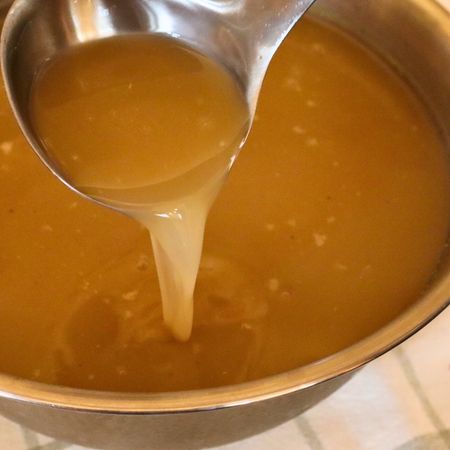

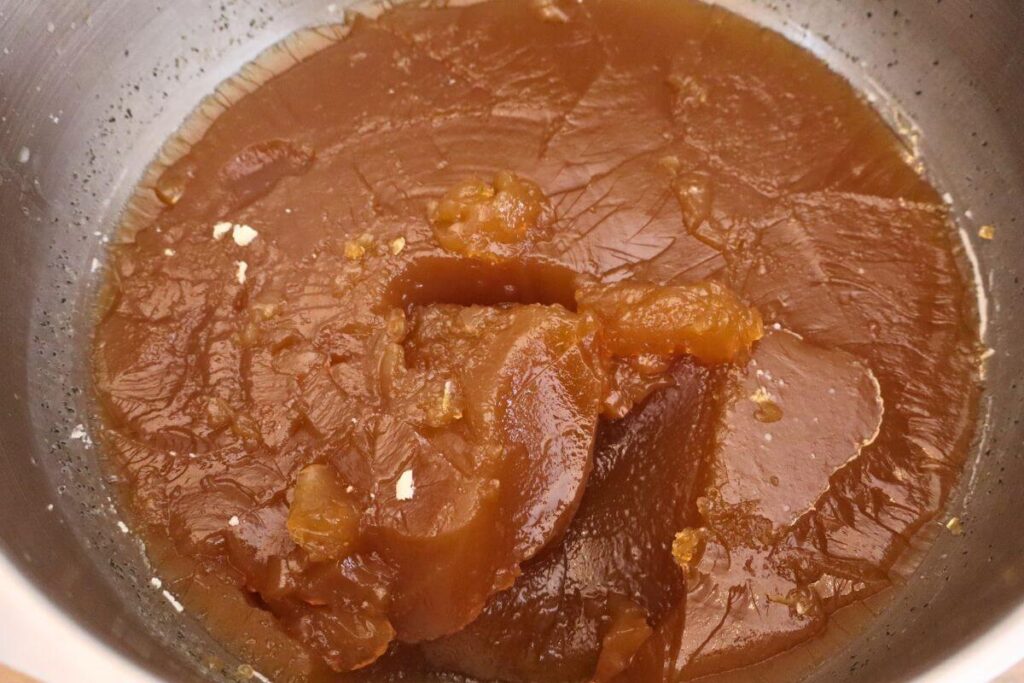
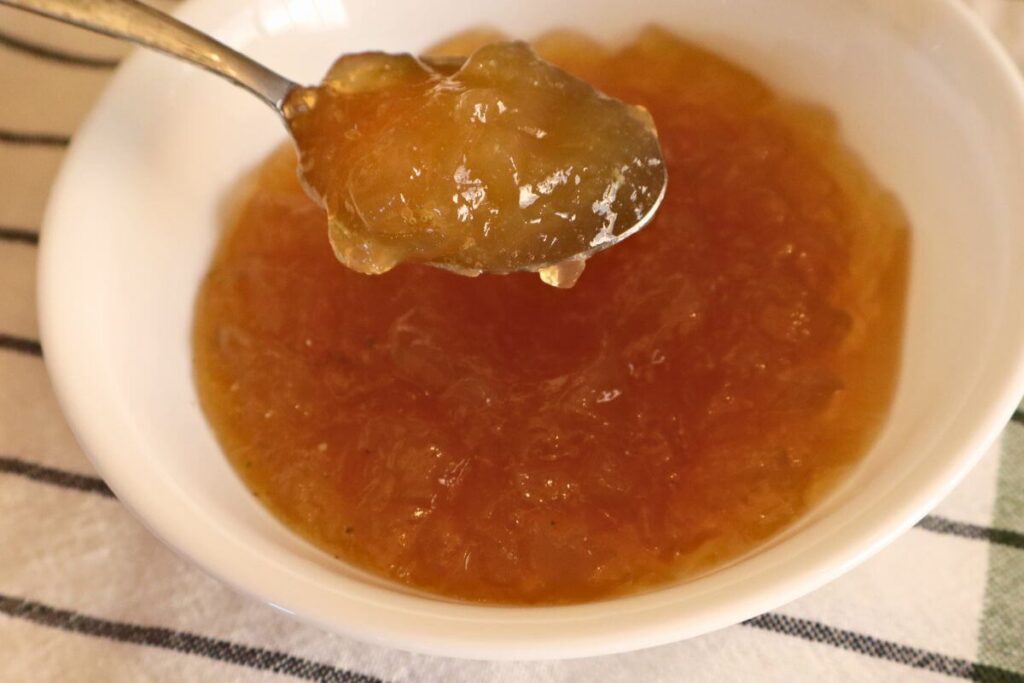
The first photo shows a batch of bone broth that stayed completely liquid even after being chilled. I took some of the same broth, and after simmering it down for about an hour, then chilling it again, it was thick and jiggly as shown in the second photo.
What Changed?
- Water content decreased- The original broth was diluted. Reducing it allowed excess water to evaporate.
- Collagan became more concentrated- The gelatin was always there; it just needed to be concentrated enough to set.
- Texture transformed-
Before: The broth was thin, watery with no structure
After: The broth was thick, rich, and gelled
How to Fix Your Broth by Reducing
- Pour the finished broth back into a stockpot
- Gently simmer uncovered on the stove
- Let it reduce 30-60 minutes (or longer for larger batches)
- Chill again in the fridge
My thoughts about reducing bone broth further:
After doing this experiment, I was reassured that my bone broth did indeed contain gelatin, it had just been diluted. Depending on how you plan to use your bone broth may influence whether or not this extra step is worth doing. For example, if you are drinking the broth for the health benefits coming from the gelatin, it might be nicer for you to only drink one cup vs. three cups for the same amount of gelatin.
If the broth is being used in soup or another recipe, personally I wouldn't take the time to reduce it because the gelatin is still there, and you'll still be getting the benefits, just in a diluted form.
This extra step could also be worth doing if your just not sure if your bone broth has any gelatin in it, and you're troubleshooting it to see how to fix the problem. This is a simple way to verify if there is plenty of gelatin and you're adding to much water, or if you need to add more collagen-rich bones next time.
Best Bones for Gelatin-Rich Bone Broth
The bones listed below contain high amounts of connective tissue, which help produce more gelatin.
Best Beef Bones
- Knuckles (which describes any joint bone)
- Oxtail
- Neck
Best Chicken Bones
- Chicken Backs
- Wings
- Necks
- Feet
For even more details and pictures of the bone types, check out my guide about the best types of bones to use for bone broth.
How to Make Bone Broth that Gels Next Time
Here's a quick summary review of the solutions. *See the section- 4 Reasons my Bone Broth Didn't Gel above for more explanation.
- Use more collagen-rich bones (joints, feet)
- Use less water (and add more bones!)
- Cook long enough
- Simmer gently (don't vigorously boil)
- Extra tip- use something acidic like apple cider vinegar to help extract minerals and collagen.
If you want a step-by-step guide on making bone broth from start to finish, you can use my roaster method or stovetop bone broth method, both designed to help you get a rich, gelatinous broth.
Why Didn't My Bone Broth Gel? Frequently Asked Questions
Does bone broth have to gel to be healthy?
Nope! Bone broth is still nutritious even if it doesn't gel. The broth still contains minerals and amino acids. Use it anyway! It's still good stuff!
Why didn't my bone broth gel in the refrigerator?
Bone broth gels when enough collagen is extracted from bones and connective tissues that break down into gelatin during cooking. If your broth didn't gel, it could be due to too much water content, not using enough collagen-rich bones, or not simmering the bones long enough.
How much vinegar should I add to bone broth?
Add about 2 Tablespoons of vinegar per gallon of water. The acid can help assist in drawing out the minerals and collagen.
Why does bone broth gel when cold but melt when heated?
Gelatin forms a soft structure when cold, which gives bone broth its jelly-like texture. When heated, that structure melts back into liquid—which is completely normal. If you've ever made a package of Jello dessert, you've already seen this process!
Learning to make bone broth takes some time and practice. If your broth didn't turn out the way you hoped at first, don't worry I've been there too! If you're ready to try again, follow my stovetop bone broth method or my roaster method to help ensure better results next time. I hope this post has helped you to understand some of the potential reasons that your broth hasn't gelled and gave you some things to try for next time. Remember that even without the gel your bone broth is still delicious and nourishing!