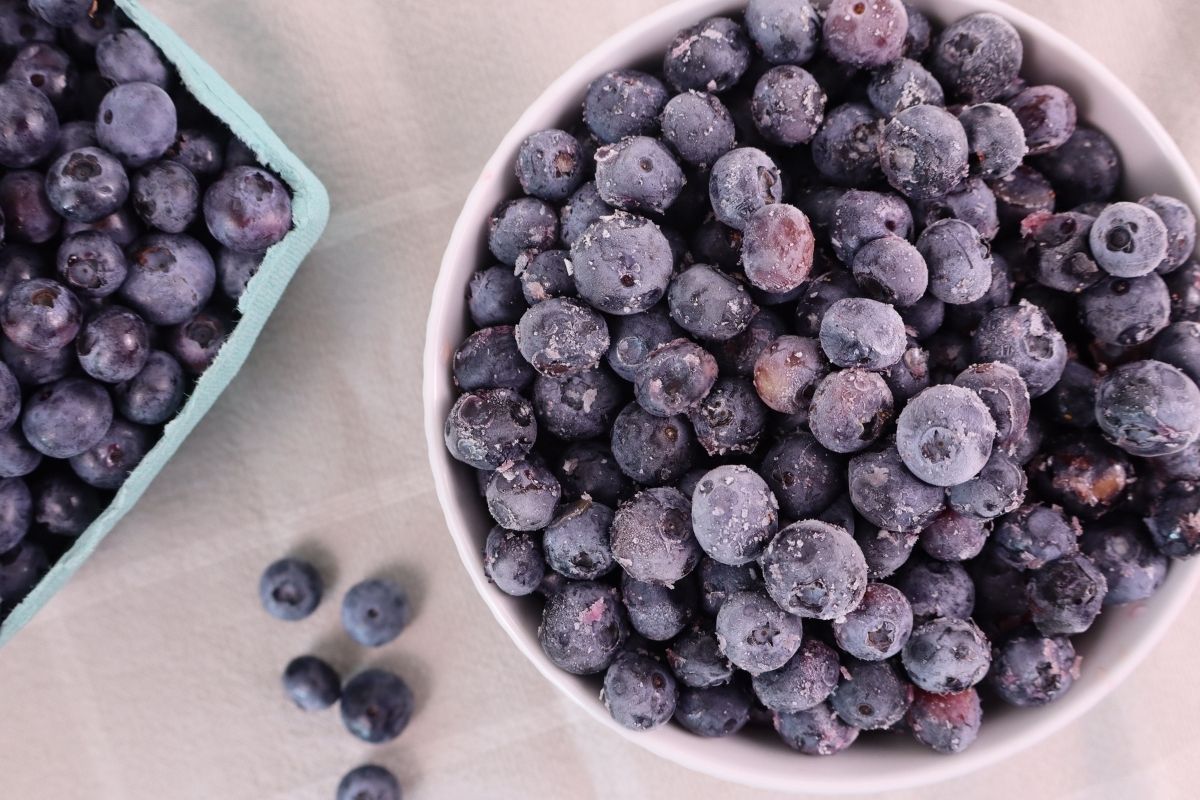
How to Freeze Blueberries
Learn how to freeze fresh blueberries with this simple method that requires minimal preparation. Simply wash, dry, package, and freeze your blueberries for easy use throughout the year.
Equipment
- Colander or large bowl
- Sheet pans or rimmed baking sheets
- Clean tea towels or paper towels
- Freezer bags or freezer-safe containers
- Permanent marker or freezer labels
Materials
- Fresh blueberries
Instructions
Wash and sort the blueberries
- Gently wash the blueberries in a colander or large bowl. Remove any leaves, stems, soft berries, or unripe berries.
Dry the blueberries
- Line sheet pans or rimmed baking sheets with clean tea towels or paper towels. Spread the blueberries out in a single layer and allow them to air dry until mostly dry.
Choose your freezing method
- Method 1: Skip flash freezing. Blueberries don't tend to stick together like strawberries, so I don't find flash freezing necessary. Simply let the blueberries air dry.Method 2: Flash freeze. If you prefer to flash freeze them, spread the blueberries in a single layer on a parchment-lined sheet pan and freeze until solid.
Package the blueberries
- Transfer the blueberries to freezer bags or freezer-safe containers. If using freezer bags, remove as much excess air as possible before sealing.
Label and store
- Label the bags or containers with the date and place them in the freezer. For the best long-term storage, keep blueberries toward the back or interior of the freezer or in a deep freezer rather than on the freezer door.
Notes
Flash freezing is optional because blueberries generally don't stick together as much as strawberries.For best quality, use frozen blueberries within 12 to 18 months.Frozen blueberries can be used directly from the freezer in smoothies, sauces, oatmeal, and many baked goods.
