How to Freeze Fresh Blueberries for Year-Round Use

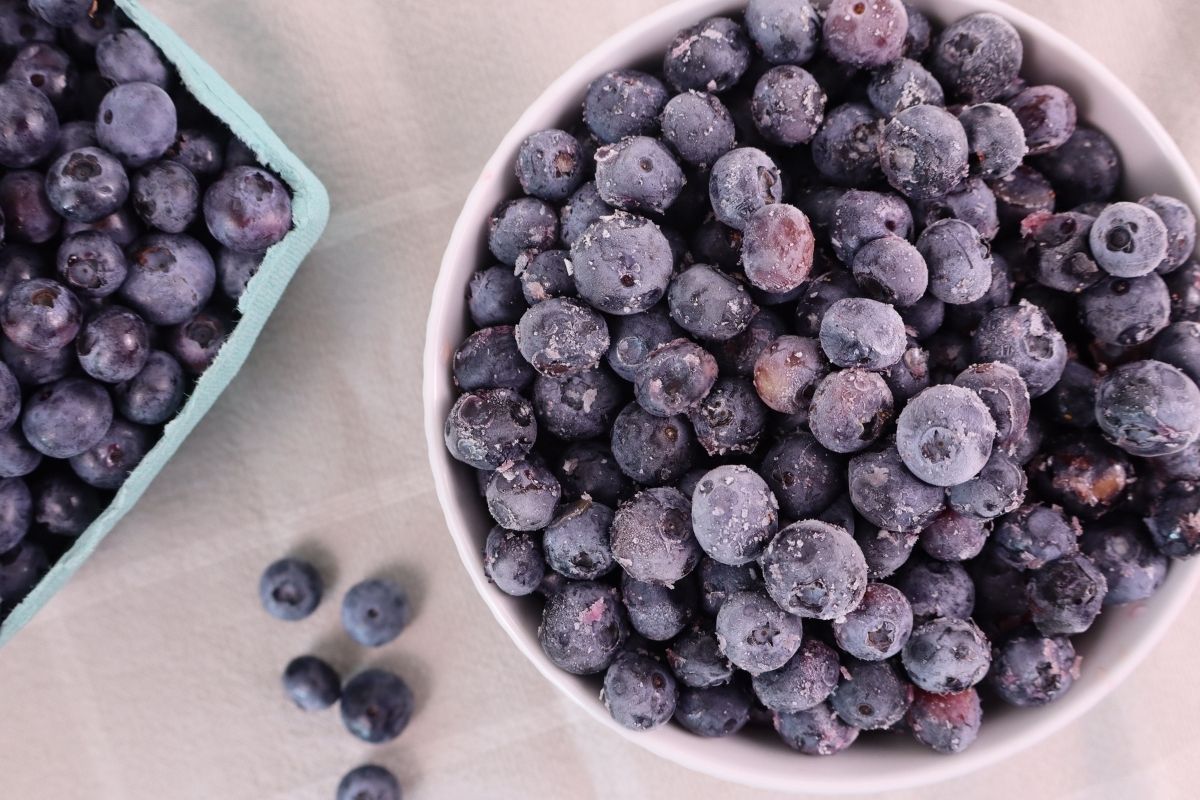
Learning how to freeze fresh blueberries is simple. Freezing blueberries is an easy way to preserve them when they’re in season, so you can enjoy them throughout the year. This simple method requires very little preparation, and you don’t need to flash freeze blueberries before storing them in the freezer.
Note: This post may contain affiliate links. Please see our disclosure policy.
Blueberries are one of my favorite things to preserve. Freezing them is one of the easiest ways to preserve them, and it’s a simple way to fill your freezer with nourishing, antioxidant-packed food! It’s a quick, easy, and might I add, tasty process.
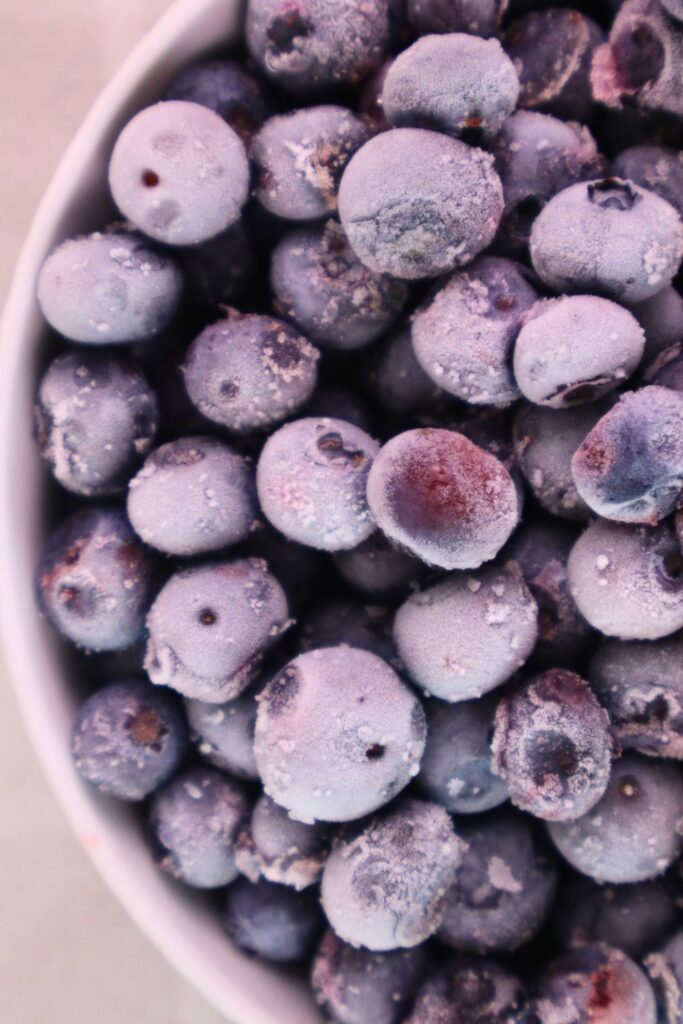
The flavor of freshly picked blueberries frozen at peak ripeness is out of this world compared to the blueberries you’ll find in the grocery store. Blueberries are something that our family is sure to freeze plenty of so that we never run out! We are thankful to have a local u-pick blueberry farm nearby that we pick at every summer. It is a fun summertime activity that we all enjoy!
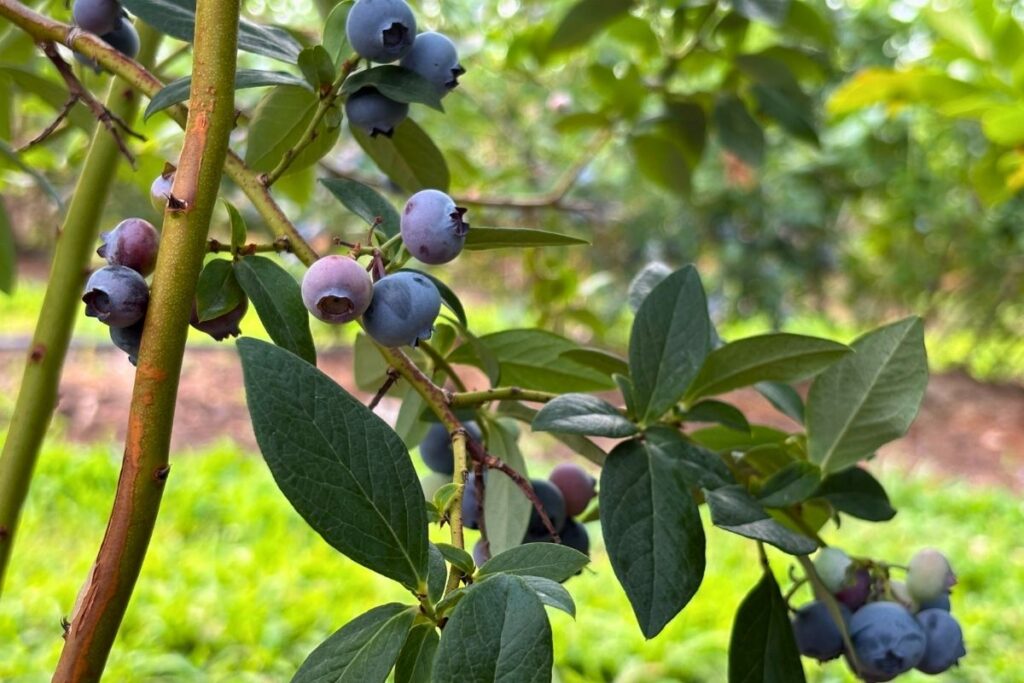
If you have small kids to take along picking, read the children’s book Blueberries for Sal before heading out. I can’t pick blueberries without thinking of the line from this book ” Kuplink, kuplank, kuplunk! “. Blueberry picking and freezing day has definitely helped make some sweet family memories.

Table of Contents
Why You’ll Love Freezing Blueberries
Easy to preserve: Blueberries require very little preparation before going into the freezer. Just wash and air dry, then bag them up!
Great for large harvests: Freezing is an easy way to preserve a large quantity of blueberries without spending hours making jam or canning.
Convenient: Once frozen, blueberries are ready to grab whenever you need them for smoothies, baking, sauces, and breakfast recipes.
Long-lasting: When properly packaged and stored, frozen blueberries can be enjoyed for many months.
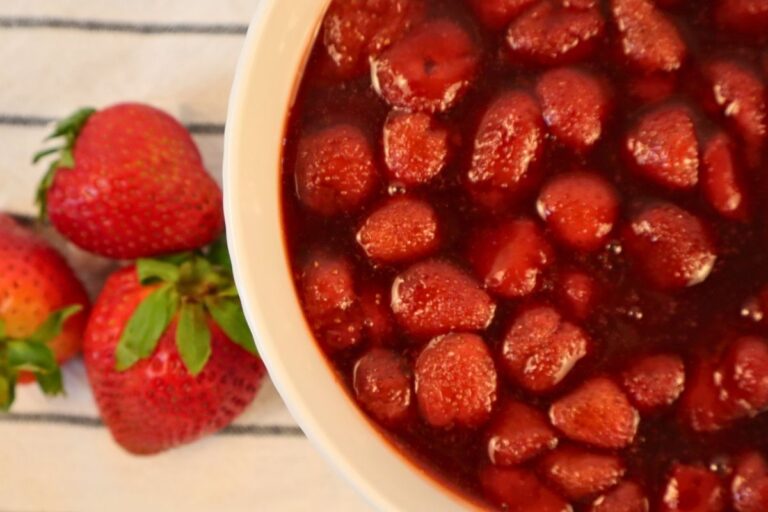
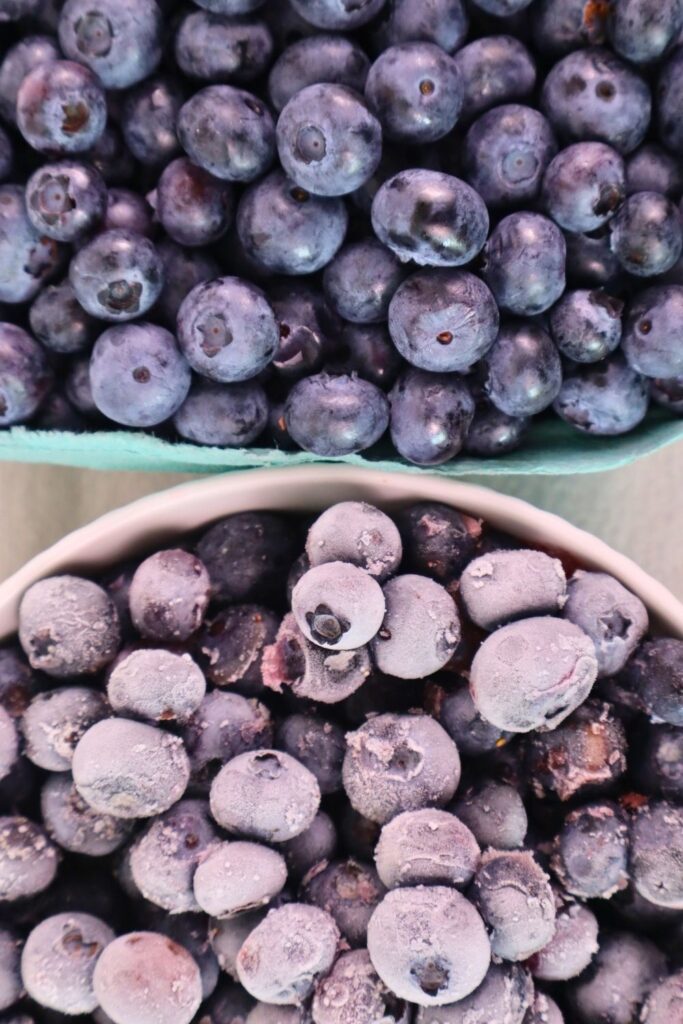
No flash freezing required: Unlike strawberries, I don’t find that blueberries need to be flash frozen to keep them from sticking together.
When to Freeze Blueberries
The best time to freeze blueberries is when they are fresh and in season. Freshly picked blueberries have the absolute best flavor! There are several ways you can stock up on blueberries during the season:
Buy them at a farmers’ market: Look for fresh, ripe blueberries when they are picked locally and available at your local farmers’ market.
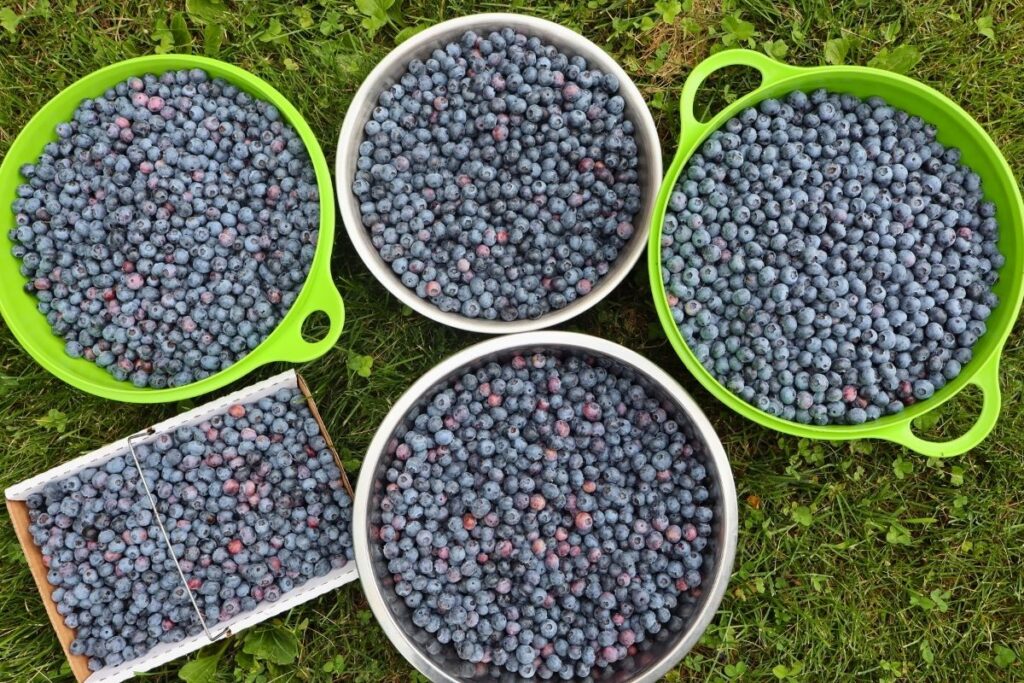
Visit a you-pick farm: Make a day of it and take your family or a friend along. Picking your own blueberries is a fun way to make memories while bringing home plenty to freeze for later. This is currently what my family does, and it’s something my kids look forward to doing every year!
Grow your own: If you have the space, growing your own blueberries is a great way to fill your freezer year after year. Just keep in mind that blueberry bushes take about three years to begin producing fruit, and don’t reach peak production until their 5 to 7 years old. So, you’ll need to plan ahead!
What You’ll Need
Fresh blueberries
Colander or large bowls – for washing the blueberries
Sheet pans or rimmed baking sheets – for spreading the blueberries out to air dry
Clean tea towels or paper towels – to line the sheet pans and absorb excess moisture
Freezer bags or freezer-safe containers – for storing the blueberries
Permanent marker or freezer labels – for labeling your bags or containers with the date
How to Freeze Fresh Blueberries
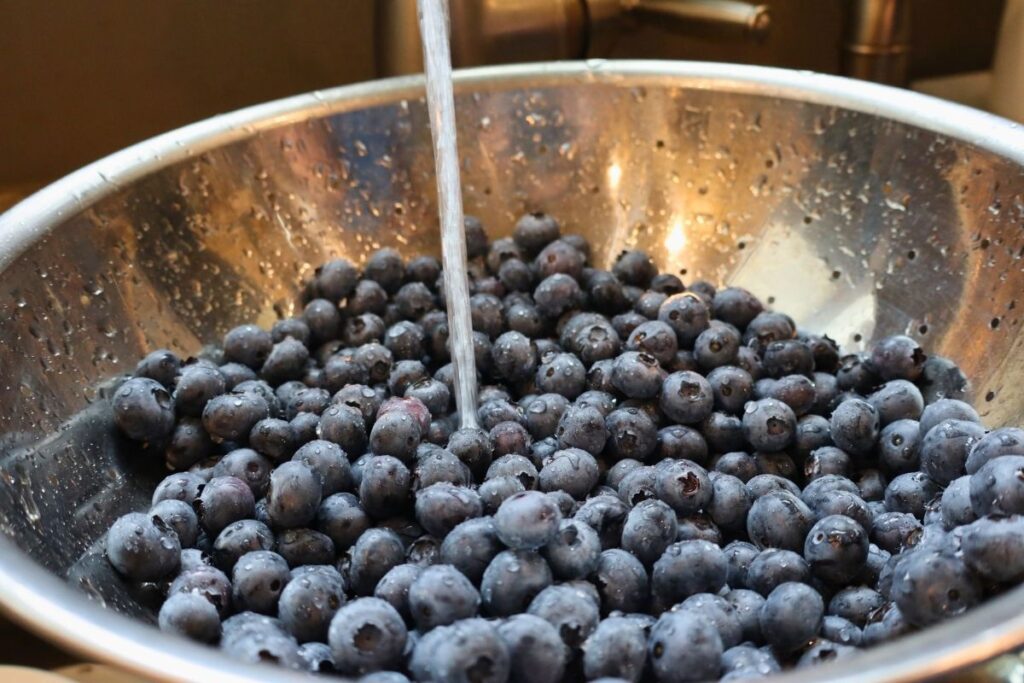
Sort and Wash the Blueberries
Place the fresh blueberries in a colander or large bowl and gently wash them with cool water. Pick through the berries as you go, removing any leaves, stems, soft berries, or berries that are unripe or starting to spoil.
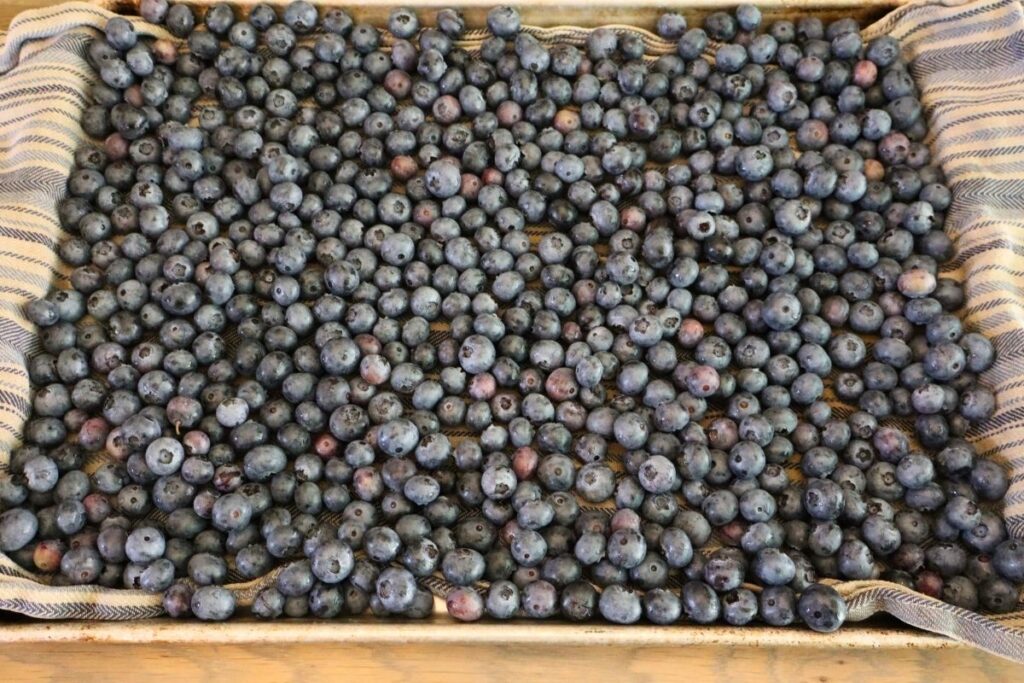
Let the Blueberries Air Dry
Line a sheet pan or rimmed baking sheet with a clean tea towel or paper towels and spread the blueberries out in a single layer. Allow them to air dry until they are mostly dry before packaging them for the freezer. You don’t need to get every drop of moisture off but letting them dry well helps prevent excess ice from forming around the berries.
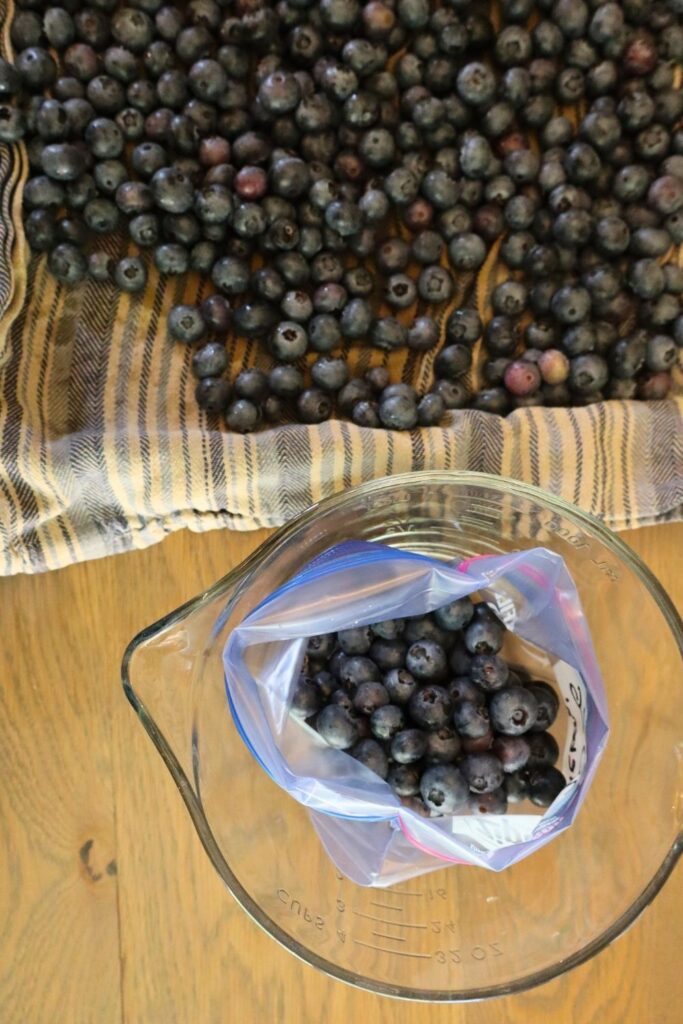
Choose Your Freezing Method
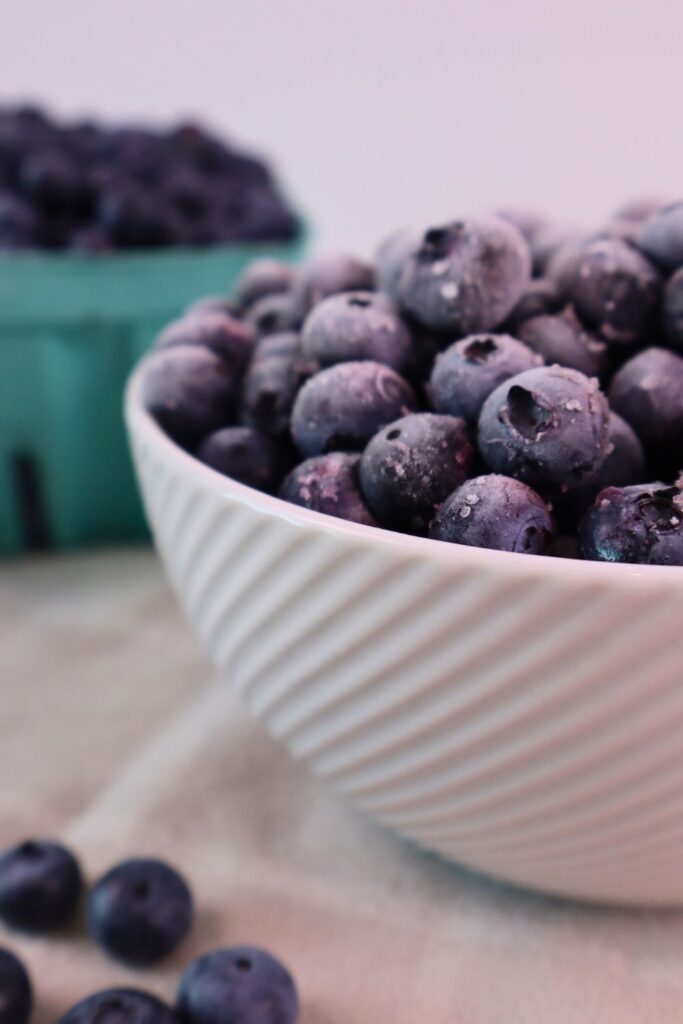
Option 1: Skip flash freezing- Unlike freezing strawberries, I find that blueberries don’t tend to stick together in the freezer, so I don’t find flash freezing necessary. Once the blueberries have mostly dried, transfer them directly to freezer bags or freezer-safe containers.
Option 2: Flash freeze- If you prefer to flash freeze your blueberries, simply spread them in a single layer on a parchment-lined sheet pan and freeze until solid. Once frozen, transfer them to freezer bags or freezer-safe containers.
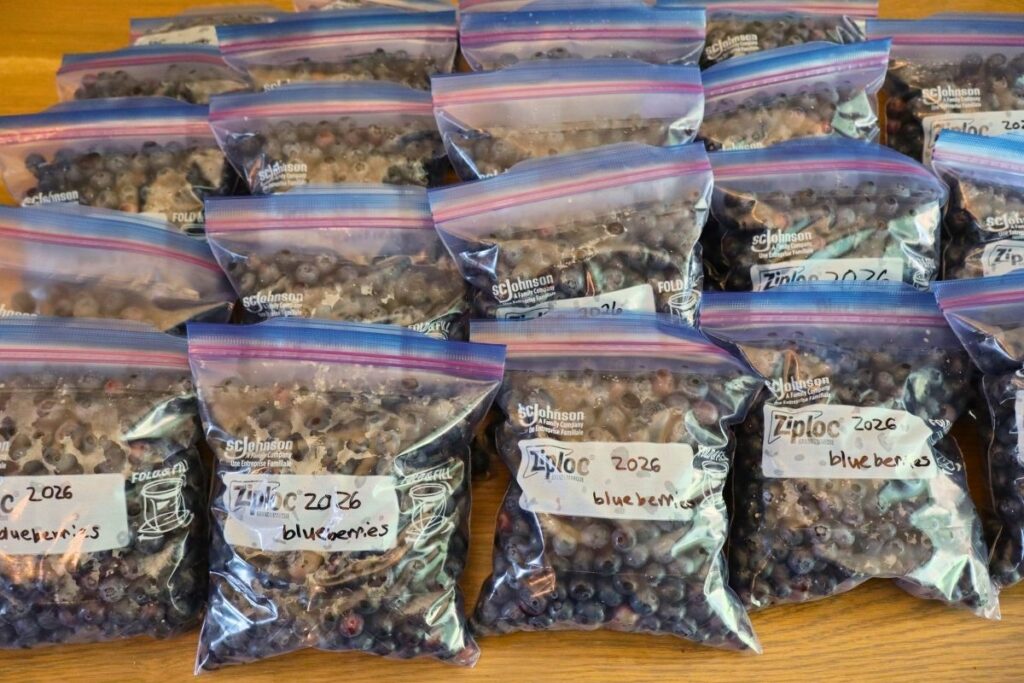
Label and Store the Blueberries in the Freezer
Whether you choose to flash freeze your blueberries or package them directly, remove as much excess air as possible from freezer bags before sealing. Label your bags or containers with the date and place them in the freezer.
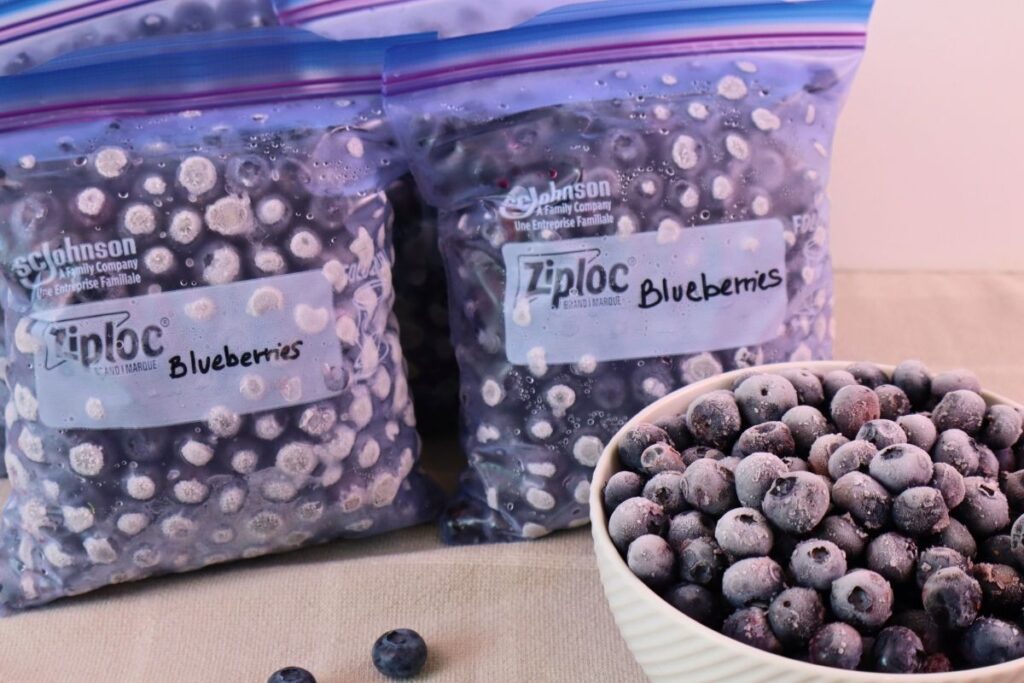
Tips for Storing Frozen Blueberries
Once your blueberries are frozen, a few simple storage tips will help maintain their quality and make the most of your freezer space.
- Use freezer bags or freezer-safe containers: Don’t use regular storage bags. Use a quality freezer bag or freezer container for the best results. To help prevent freezer burn, remove as much excess air as possible from freezer bags before sealing.
- Label your blueberries: Write the date on each bag or container so you can keep track of when they were frozen.
- Store them toward the back of the freezer: Avoid the freezer door, where temperatures fluctuate more frequently because of opening and closing the freezer door. For the best long-term storage, a deep freezer is ideal. Keep them towards the middle or back/bottom of the freezer.
- Help keep them frozen during a power outage: If you have a prolonged power outage, berries can thaw more quickly than larger, densely packed frozen foods. Keeping them toward the back or interior of the freezer gives them more protection from warming temperatures.
How Long Do Frozen Blueberries Last?
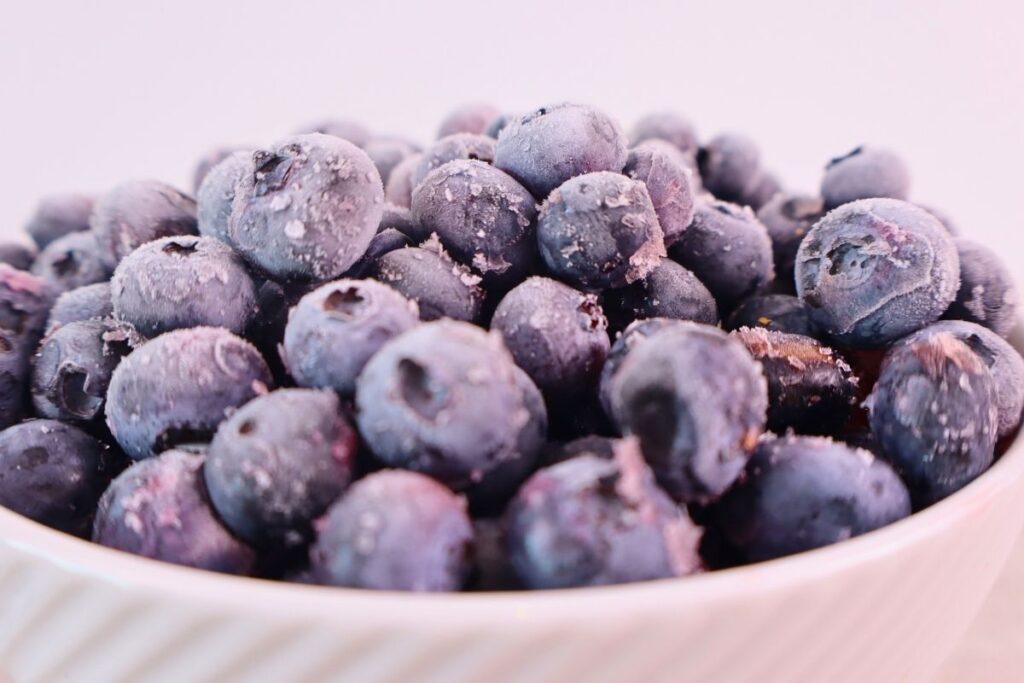
For the best quality, frozen blueberries are best used within 12 to 18 months. When properly packaged and kept continuously frozen at 0°F or below, they can remain safe to eat beyond that time, but their flavor, texture, and overall quality may gradually decline. That said, I know we have eaten them after a couple of years and they were just fine!
To help your blueberries last as long as possible, use good-quality freezer bags or containers and remove excess air from the bags. Avoid storing them in the freezer door and keep them in the middle or back/bottom part of the freezer. A deep freezer is ideal for long-term storage.
How to Use Frozen Blueberries
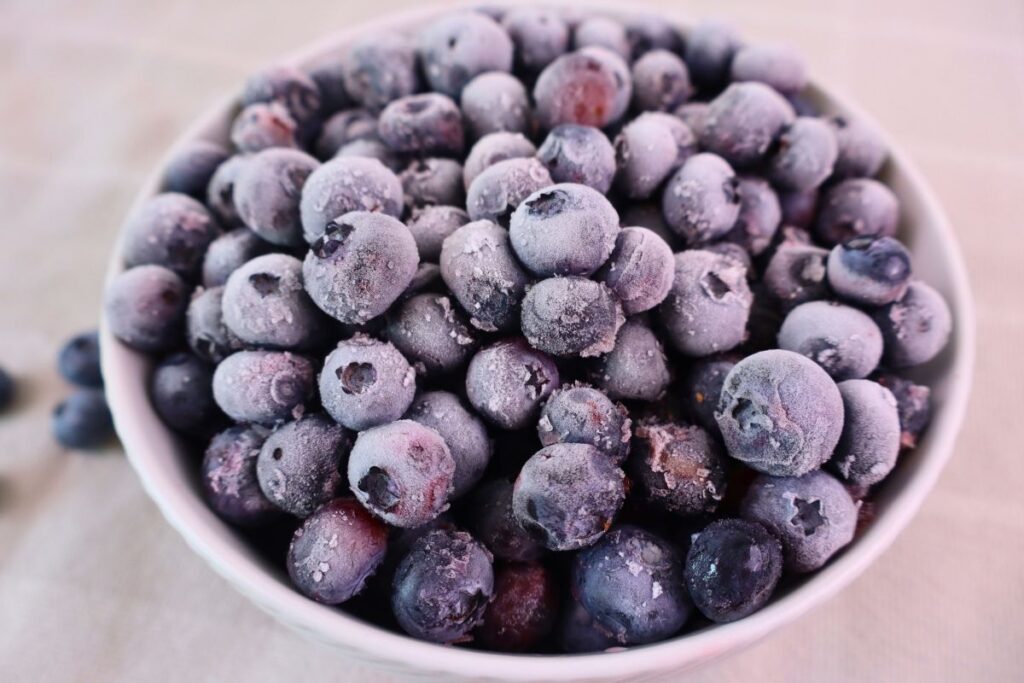
Frozen blueberries can be used directly from the freezer or thawed, depending on the recipe.
- Smoothies: Add them straight from the freezer for a cold, thick smoothie. They are especially yummy when mixed with frozen strawberries!
- Breakfast: Add frozen blueberries to oatmeal, yogurt, pancakes, waffles, or smoothie bowls.
- Baking: Use them in muffins, quick breads, crisps, cobblers, and other baked goods.
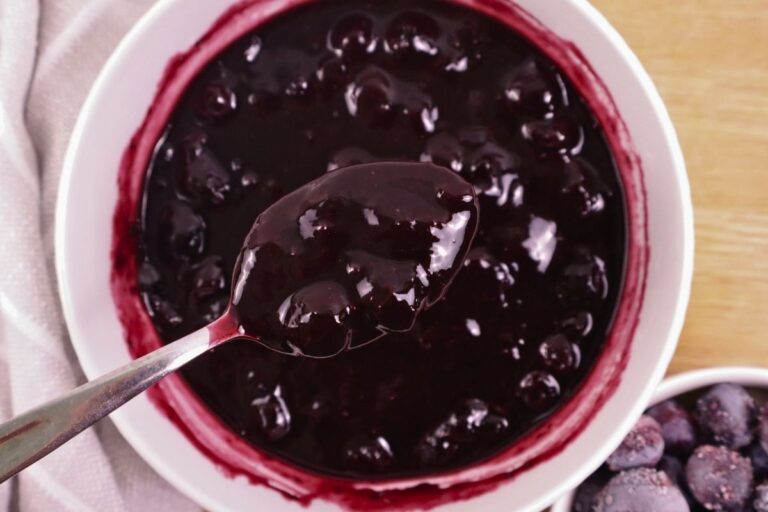
- Blueberry sauce: Use frozen blueberries to make homemade blueberry sauce or mixed berry sauce—perfect for topping mini cheesecakes, homemade ice cream, pancakes, and waffles.
- Desserts: Add them to pies and other blueberry desserts.
- As a snack: Thaw slightly and enjoy them as a simple healthy snack.
Thawing: If a recipe calls for thawed blueberries, thaw them first and drain any excess liquid. Keep in mind that thawed blueberries will be softer than fresh.
How to Freeze Blueberries
Equipment
- Colander or large bowl
- Sheet pans or rimmed baking sheets
- Clean tea towels or paper towels
- Freezer bags or freezer-safe containers
- Permanent marker or freezer labels
Materials
- Fresh blueberries
Instructions
Wash and sort the blueberries
- Gently wash the blueberries in a colander or large bowl. Remove any leaves, stems, soft berries, or unripe berries.
Dry the blueberries
- Line sheet pans or rimmed baking sheets with clean tea towels or paper towels. Spread the blueberries out in a single layer and allow them to air dry until mostly dry.
Choose your freezing method
- Method 1: Skip flash freezing. Blueberries don't tend to stick together like strawberries, so I don't find flash freezing necessary. Simply let the blueberries air dry.Method 2: Flash freeze. If you prefer to flash freeze them, spread the blueberries in a single layer on a parchment-lined sheet pan and freeze until solid.
Package the blueberries
- Transfer the blueberries to freezer bags or freezer-safe containers. If using freezer bags, remove as much excess air as possible before sealing.
Label and store
- Label the bags or containers with the date and place them in the freezer. For the best long-term storage, keep blueberries toward the back or interior of the freezer or in a deep freezer rather than on the freezer door.
Notes
Frequently Asked Questions About Freezing Blueberries
Do you need to thaw frozen blueberries before using them?
Not always. You can use them frozen in smoothies, sauces, oatmeal, and many baked goods. If a recipe calls for thawed berries, thaw and drain any excess liquid first.
How long do frozen blueberries last?
For the best quality, use frozen blueberries within 12 to 18 months. Keeping them well sealed and consistently frozen will help prevent freezer burn.
Do frozen blueberries stick together?
No, I have not found this to be the case as long as they air dry before packaging them up. If you’re concerned about them sticking together you can flash freeze them in a single layer on a parchment-lined sheet pan first.
Can you freeze blueberries without flash freezing?
Yes. Flash freezing is optional. I don’t find it necessary because blueberries don’t tend to stick together as much as strawberries. Simply dry them well, bag them, and freeze.
Do blueberries need to be washed before freezing?
Yes. Gently wash blueberries in a colander or bowl, then spread them out on clean tea towels or paper towels and let them dry well before freezing. Removing excess moisture helps prevent ice from forming around the berries.